
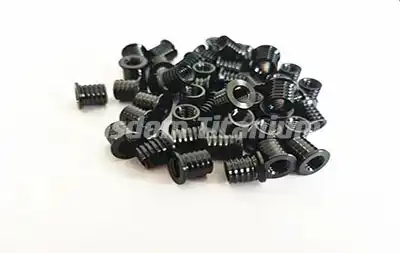
When procuring fasteners for bicycle manufacturing, the material choice between titanium and steel profoundly affects product performance, lifecycle costs, and market positioning. Titanium fasteners for bicycles deliver exceptional strength-to-weight ratios and corrosion resistance, making them the preferred solution for high-performance road bikes, mountain bikes, and racing applications. Steel fasteners, conversely, offer robust tensile strength and budget-friendly pricing suitable for commuter bikes and mass-market production. Understanding these distinctions empowers purchasing managers, engineers, OEM clients, and distributors to align fastener selection with production demands, regulatory compliance, and customer expectations. This guide examines material properties, economic implications, application best practices, supplier considerations, and decision-making frameworks to support informed procurement strategies that enhance competitive advantage and long-term value.
Titanium fasteners for bicycles represent a strategic investment for manufacturers targeting premium segments where lightweight construction and durability distinguish market leaders. Steel remains indispensable for volume production where cost efficiency drives profitability. Balancing these factors requires a comprehensive understanding of how each material performs across diverse operating environments and application scenarios.
Material Properties and Performance Comparison
Strength-to-Weight Ratio and Mechanical Performance
Titanium fasteners for bicycles have a density of 4.43–4.51 g/cm³, which is much lower than steel's density of 7.8 g/cm³. However, they are just as strong as or stronger than steel fasteners. Grade 5 titanium (Ti-6Al-4V) has a yield strength of about 830 MPa and is often used for load-bearing parts like stem bolts and brake calliper screws. This means that they are up to 45% lighter than steel versions without affecting the strength of the structure. This is an advantage that racing teams and companies that make performance bikes use to lower the rotational mass of the wheels and other parts of the drivetrain. This directly improves acceleration and handling responsiveness.
Tensile strengths of steel fasteners, especially high-grade stainless steel types, are higher than 1000 MPa. This means they can be used for heavy-duty tasks like e-bike motor mounts and cargo bike frames, where strength is more important than weight. The flexibility of the material also makes it better at absorbing shocks in rough terrain situations, which lowers the risk of sudden failure when hit.
Corrosion Resistance and Environmental Durability
Titanium's passive oxide layer grows back on its own when oxygen is present, making it very resistant to saltwater, humidity, and chemicals. Titanium fasteners are good for bikes that are used near the coast or in wet areas because they don't need any coatings to keep their shape or look good for decades. This feature is especially useful for riding bikes and naval uses where steel fasteners would need to be replaced often.
To keep steel bolts from rusting, the outside needs to be treated with zinc plating, galvanising, or powder coating. Some types of stainless steel, like 316, are more resistant to corrosion, but they can still pit and crack in places with a lot of chloride. Maintenance costs more money and can make things less safe if rust gets worse in important fixing places without being noticed.
Fatigue Resistance and Lifecycle Performance
When making high-quality titanium fasteners, thread rolling technology keeps the grain structure continuous, which makes the wear life 30% longer than thread-cut options. This way of making things is very important for safety-important parts like seatpost bolts and handlebar clamps that are stressed millions of times. Steel bolts don't wear out as quickly as other materials, but they need to be inspected and replaced more often, especially in high-vibration environments like mountain bike suspension links.
Titanium is not magnetic, so it doesn't interfere with electronic shifting systems and power meters, which are becoming more and more common in modern bikes. Electromagnetic noise that is caused by steel screws can affect the accuracy of sensors and the trustworthiness of wireless communication.
Economic Considerations and Cost-Benefit Analysis
Initial Investment vs. Lifecycle Value
Titanium fasteners for bicycles cost three to five times more per unit than similar steel fasteners, which makes buyers who care about price hesitate to buy them. Different results come from a full total cost of ownership analysis. When clients switched from steel to titanium fasteners in high-end bike production, they cut down on upkeep by 60%. This led to fewer warranty claims and a better image for the brand.
Titanium is usually only used for flagship models with production runs of more than 5,000 units per year. The higher cost per unit (often $2–8 per bike) helps with store pricing and customer happiness. Manufacturers in the middle market are good at using both titanium and steel. For example, they use titanium for obvious and performance-critical fasteners and steel for hidden structural uses.
Bulk Procurement and Supply Chain Economics
Since 2016, we've been working with bicycle makers and have learned that when you buy more than 10,000 pieces at once, you can get volume deals that cut the price of titanium fasteners by 15 to 25 percent. Smaller custom bike shops can get titanium without having to keep a lot of goods on hand because they only have to order 200 pieces at a time. For ultra-high-volume production (more than 50,000 units per year), where procurement efficiency and standard tooling drive decisions, steel fasteners are still a good choice.
The stability of the supply chain is also a part of economic analysis. Titanium prices change more quickly because of demand in aircraft and the cost of mining it, while steel prices stay pretty stable. This risk can be reduced by making long-term deals with ISO 9001-certified sources that include set price windows and guaranteed material supply.
Brand Positioning and Market Differentiation
Manufacturers of high-end bikes always say that the extra cost of titanium hardware is worth the 8–12% rise in price compared to similar bikes with steel hardware. Marketing study shows that people think titanium fasteners are a sign of better engineering and attention to detail, which influences their choice to buy in the $3,000+ price range. This psychological value adds to the material's useful properties, making it harder for cheaper rivals to get through competitive moats.
Application and Installation Best Practices
Fastener Types and Component Compatibility
For bicycle uses, different types of titanium fasteners for bicycles are needed to meet special functional needs. Socket head cap screws (DIN 912) come in M5 and M6 sizes and are used for stem and handlebar clamps that need a lot of gripping force and small shapes. Countersunk screws (DIN 7991), which fit flush with brake rotors and gear bolts, cut down on drag and the chance of getting caught. For mounting points that can be seen on frames and accessories, button head screws (ISO 7380) look good and spread loads over larger bearing surfaces.
Our production skills include M3 to M10 sizes in all normal setups, as well as custom designs made to fit unique frame geometries. Surface processes like anodising and PVD finishing let you change the colour to make your brand stand out and make the surface harder so it doesn't come off during installation. When titanium fasteners are paired with carbon fibre frames, these treatments are especially helpful because they protect the interface and keep the materials from getting damaged.
Installation Torque Specifications and Tooling
Because titanium has a lower amount of flexibility than steel, the way it is installed needs to be changed. To keep threads from stripping or fasteners from giving way, recommended torque values are usually 10 to 15 percent less than steel equivalents. When using titanium hardware, we tell our clients to set up torque wrench verification tools to make sure that assembly workers use 4-6 Nm for M5 stem bolts and 8–10 Nm for M6 brake calliper mounts.
Thread lubricants made for titanium applications lower the coefficients of friction and stop aluminium or titanium frame parts from cold welding to titanium fasteners. Copper or nickel-based anti-seize products should not be used because they can cause galvanic corrosion at metal surfaces that are not the same. When installed correctly, the service life is increased and the clamping force stays the same from one production batch to the next.
Quality Control and Compliance Standards
To follow safety rules and keep their warranty promises, OEM manufacturers need to be able to track the fasteners they use and get materials certified. We test each batch of our products to make sure they are the right size, have the right tensile strength, and have the same surface finish. Each package comes with material certificates that list the chemicals that were used and their mechanical qualities. This helps clients stay in line with ISO 9001 and meet the requirements of their liability insurance.
When inspection standards come in, they should check that the threads are engaged by using a gauge and looking for surface flaws. Titanium is a bright metal that makes cracks and other flaws easy to see. This is different from coated steel fasteners, where flaws may be hidden by the coatings. Taking these steps to verify stops field failures and keeps the brand's integrity safe.
Conclusion
When making bicycles, picking between titanium fasteners for bicycles and steel bolts means matching performance needs, cost concerns, and goals for market positioning. Titanium fasteners have the best strength-to-weight ratios, resistance to corrosion, and fatigue life, which is why they cost more than other materials. They are best for high-performance and long-lifecycle applications. For large-scale production and uses where saving weight doesn't give a big competitive edge, steel screws are still a good choice. Hybrid approaches are often used in successful procurement strategies, strategically placing each material where its properties create the most value. Manufacturers can get the best fastener standards while minimising supply chain risks and keeping production running smoothly by working with experienced suppliers who offer engineering support, quality certifications, and flexible minimum order numbers.
FAQ
Do titanium fasteners justify their higher cost for bicycle applications?
The cost explanation for titanium fasteners for bicycles depends on how you place your product and who you want to buy it. Titanium bike bolts have benefits that can be measured, such as being 45% lighter, resistant to corrosion, and lasting 30% longer than steel bolts. When elite bike companies sell models with titanium parts, the retail prices always go up by 8–12%, which easily covers the $2–8 per unit cost premium. Titanium's properties are most useful for high-end mountain bikes, touring bikes, and race bikes. However, the cost may not be worth it for cheap commuting bikes.
How do titanium fasteners compare to stainless steel for corrosion resistance?
Titanium fasteners work much better in corrosive conditions than even marine-grade 316 stainless steel. Titanium's inactive oxide layer grows back right away if it gets broken. This protects against saltwater, humidity, and chemicals without the need for surface treatments. Stainless steel fasteners need to be coated, and they can still rust in places with a lot of chloride. Coastal areas and wet conditions greatly benefit from titanium's long life and dependability.
Can titanium and steel fasteners be used interchangeably on the same bicycle?
When mixing materials, you need to think carefully about the power specs and galvanic corrosion potential. With the right torque values, titanium fasteners can be used instead of steel in most situations. Don't let titanium touch steel directly if you don't have the right shielding or anti-seize chemicals. Many manufacturers find it more cost-effective to use a mix of materials, like titanium for fasteners that are seen and need to perform well and steel for parts that are hidden.
Partner with a Trusted Titanium Fasteners for Bicycles Manufacturer
Wisdom Titanium delivers precision-engineered titanium fasteners for bicycles that improve the performance, longevity, and market value of your goods. We've been helping bicycle makers all over the world since 2016 from our site in Baoji Titanium Valley, which is China's main titanium production hub. We have a huge selection of M3 to M10 sizes in DIN 912, DIN 7991, DIN 6921, ISO 7380 types, as well as unique designs made just for you. We can anodise or PVD coat your parts, we are ISO 9001 certified, and you only need to order 200 pieces per specification to get the quality, flexibility, and technical support your production needs. Get in touch with us at sales@wisdomtitanium.com to talk about bulk prices, unique solutions, and how our titanium fasteners for bicycles supply can help you stay competitive and please your pickiest clients.
References
- American Society for Testing and Materials. (2021). "Standard Specification for Titanium and Titanium Alloy Fasteners." ASTM F467/F467M-21, West Conshohocken, PA.
- Davis, J.R. (2006). "Corrosion of Titanium and Titanium Alloys." In ASM Specialty Handbook: Corrosion: Understanding the Basics. ASM International, Materials Park, OH.
- European Committee for Standardization. (2019). "Mechanical Properties of Corrosion-Resistant Stainless Steel Fasteners - Part 2: Nuts with Specified Grades and Property Classes." EN ISO 3506-2:2019, Brussels, Belgium.
- Lutjering, G. and Williams, J.C. (2007). "Titanium: Engineering Materials and Processes." 2nd Edition, Springer-Verlag, Berlin, Germany.
- Society of Automotive Engineers. (2018). "Fastener Marking and Test Methods for Mechanical and Material Requirements." SAE J429-2018, Warrendale, PA.
- Zhang, W., Chen, Y., and Liu, H. (2020). "Fatigue Performance of Cold-Rolled Thread Titanium Alloy Fasteners in Aerospace Applications." Journal of Materials Engineering and Performance, Volume 29, Issue 6, pp. 3842-3851.