
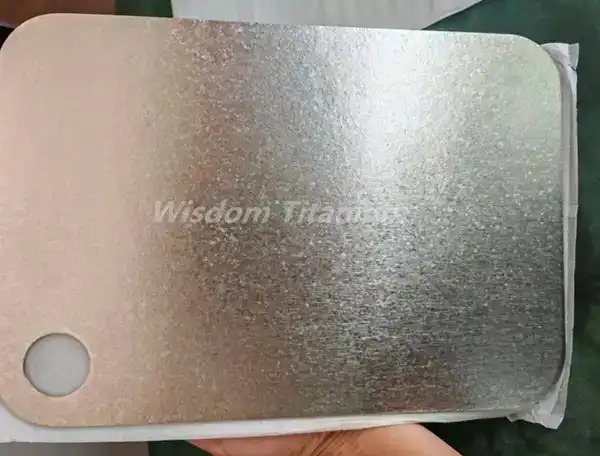
A certified pure titanium cutting board is the best piece of modern kitchen equipment. It is made of 99.9% pure titanium and is designed for use in both residential and professional kitchens. This high-tech cutting surface is both very durable and very clean, making it the best choice for people who care about their health and want the best possible standards in food preparation. Titanium cutting boards are better at keeping bacteria, smells, and stains away than typical wood or plastic cutting boards. They also keep the original taste of the food throughout every cooking operation.
Understanding Certified Pure Titanium Cutting Boards
Material Composition and Certification Standards
Certified pure titanium cutting boards are made from high-quality titanium. We check these boards very carefully to make sure they are as pure and useful as possible. The titanium is 99.9% pure, thus the surface has no holes in it. This naturally stops bacteria from forming and keeps things like scents, liquids, and other things that commonly come on cutting surfaces from getting on them.
There are a multitude of tests that verify the material's chemical makeup, structural soundness, and safety standards as part of the certification process. These boards are safe to use with food since they meet high international food safety standards. You may use them in a lot of different cooking situations. The exact CNC finishing process makes sure that the surface is smooth and even, which makes it work better and appear better.
Superior Hygienic Properties and Food Safety
Titanium is a fantastic material for surfaces used to cook food since it naturally kills bacteria. The metal's natural properties make it hard for germs to grow, which decreases the risk of contamination when you handle food. This is especially helpful in professional kitchens, where they have to follow strict cleanliness rules to stay within the law and keep clients safe.
Titanium doesn't react with anything, so acidic foods like tomatoes and citrus fruits won't modify the taste of the metal or corrode it. This chemical stability retains the true flavors of the food and makes the cutting board last longer, even if you use it a lot.
Key Criteria for Selecting Titanium Cutting Boards in B2B Procurement
Durability and Performance Benchmarks
When buying titanium cutting boards for professional use, the most crucial thing to think about is how long they will survive. These cutting surfaces are incredibly resilient and won't wear out, become scratched, or break from impacts that would destroy less durable materials over time. It has a superior strength-to-weight ratio than other materials, which means it works well yet is light enough to be easy to carry.
Titanium is a good choice for professional kitchens because it doesn't dull blades and can handle a lot of cutting. You don't have to replace the board as often because it stays in good shape even after a lot of use. This saves you money and keeps the kitchen running smoothly.
Customization Options and Technical Specifications
Often, modern procurement needs necessitate tailored solutions that fit with the way things work in a certain way. Good manufacturers make titanium cutting boards in several thicknesses, such as 1.75mm, 2mm, 2.5mm, and 3mm, to meet the needs of different users and storage spaces. Custom sizes and finishes let institutions make the most of their workspaces and keep their aesthetic standards high.
Procurement experts can make solutions that improve workflow efficiency by being able to choose surface textures, edge treatments, and built-in features. Custom design options include adding brand features, measurement markers, or unique surface patterns that are useful for certain cooking tasks or meeting the needs of a company's brand.
Market Analysis and Supplier Evaluation
To find reliable suppliers, you need to thoroughly check out their production capacities, quality control procedures, and customer service systems after the sale. Working directly with factories usually gets you better deals than working with third-party distributors. This is because they have better prices and more ways to make things your own. ISO certificates prove that established manufacturers are dedicated to quality standards that fulfill the expectations of professional purchasers.
Reputation analysis should include technical competence, reliability of delivery, and responsiveness to customer service. Suppliers who keep thorough records of their raw materials and employ innovative production procedures usually provide consistent quality and lead times that help with operational planning.
Practical Usage and Care of Certified Pure Titanium Cutting Boards
Cleaning Protocols and Maintenance Procedures
Taking care of titanium cutting boards is easy and will make them last longer. Regularly cleaning with warm water and mild soaps gets rid of food particles without hurting the surface. Because they are resistant to corrosion, they can be used with harsh cleaning methods like bleach solutions or high-temperature sterilizing processes that are widespread in businesses.
Cleaning chemicals can't reach deep inside because the surface isn't porous. This speeds up the processes for rinsing and drying. This efficiency means fewer people are needed, but it also makes sure that the food preparation tasks are fully cleaned between them. You need to oil wood cutting boards, and plastic boards get stains that won't come off. But it doesn't take much work to keep titanium surfaces looking like new.
Application Scenarios and Versatility
Titanium cutting boards are great for a wide range of cooking activities, from preparing delicate shellfish to processing tough meat. The chemical stability of the material makes it great for preparing acidic foods, and its strength allows it to handle hard chopping and slicing without damaging the surface. Professional cooks like how titanium cuts evenly and stays at a stable temperature.
Titanium's ability to withstand weather and temperature changes makes it useful in commercial kitchens, catering businesses, and outdoor cooking areas. The material works well in both hot and very cold temperatures, so it may be used in both heated preparation rooms and refrigerated storage spaces without worrying about it warping or cracking.
Addressing Common Misconceptions
At first, some people are afraid that titanium's hardness will dull knife edges, but well-made cutting boards include surface treatments that make them tough and preserve the blades at the same time. The material's natural properties make it the best cutting surface since it stays sharp and offers you a solid grip, which keeps you safe when handling food.
People who don't have a lot of money frequently don't want to buy titanium because it's expensive, but in the long term, titanium is usually a better deal than other materials that need to be replaced often. It doesn't need to be replaced often because it doesn't get damaged or worn out, and it keeps meeting its performance standards for a long time.
Procurement Insights: Buying and Supplying Titanium Cutting Boards
Sourcing Strategies and Quality Assurance
To buy titanium cutting boards successfully, you need to know how the supply chain works and how to check the quality. When you have direct ties with manufacturers in established titanium manufacturing areas, you can typically get better materials and prices that are more competitive. Regions with well-developed titanium industry clusters usually have better raw material quality, more skilled workers, and more reliable supply chains.
Quality assurance procedures should include checking the surface finish, checking the accuracy of the dimensions, and certifying the materials. Reputable manufacturers give full paperwork, such as material test certifications, dimensions reports, and compliance attestations, that meet the standards for procurement validation.
Cost-Efficiency Analysis and Bulk Ordering
Bulk purchasing strategies save a lot of money and make sure that major businesses always have the materials they need. Pricing structures based on volume frequently save you a lot of money on each item, which helps your budget operate better as a whole. If you have solid relationships with reliable suppliers, you can work out deals that are fair for both the money you invest up front and the benefits you obtain in the long run.
When you order something custom, the procurement process includes making detailed requirements, getting prototypes approved, and organizing production schedules. Contracts should be clear and cover things like quality standards, delivery times, and performance guarantees that protect the buyer's interests and hold both parties accountable.
Market Trends and Future Considerations
The professional food service industry is seeing a rise in demand for titanium cutting boards as more and more individuals want to use eco-friendly materials and keep their kitchens clean. Better manufacturing methods and surface treatments are making it easier to make items that are unique to each customer and less expensive to make. These trends allow early adopters a chance to move ahead of their competitors by making smarter choices regarding the tools they use.
More ways to process titanium let you add more textures and elements to the surface that help it work better and make the user experience better. These upgrades can help procurement professionals improve the way their facilities work and stay at the top of their field if they stay up to date on new capabilities.
Conclusion
Certified pure titanium cutting boards are a huge step forward in professional kitchen equipment. They are more durable, cleaner, and longer-lasting than any other type of cutting board. Their 99.9% pure titanium makes surfaces that don't have pores, so they don't hold smells, stains, or bacteria, and they keep the ingredients' original flavor. Their resilience to corrosion, ease of maintenance, and knife-friendly features make them great for professional kitchens that have strict operational needs. The ability to change the thickness and other settings makes it possible to create personalized solutions for a wide range of cooking needs. Buying high-quality titanium cutting boards is worth the money since they last longer and require less maintenance, which makes them more efficient and cost-effective in the long run.
Partner with Wisdom Titanium for Premium Certified Titanium Cutting Boards
Wisdom Titanium stands ready to fulfill your titanium cutting board requirements with superior quality products and comprehensive customization capabilities. Located in Baoji Titanium Valley, China's premier titanium production center, our ISO 9001-certified manufacturing facility leverages advanced CNC technology and stringent quality control processes to deliver exceptional cutting surfaces for professional applications. Our experienced team provides personalized consultation services to develop solutions that meet your specific operational needs and budget parameters. Contact our sales team at sales@wisdomtitanium.com to discuss your requirements and explore our complete range of titanium cutting board solutions. As a trusted titanium cutting board manufacturer, we offer competitive pricing, reliable delivery schedules, and after-sales support that ensures long-term satisfaction with your procurement investment.
FAQ
What makes titanium cutting boards superior to traditional materials?
Titanium cutting boards offer several advantages over wood and plastic alternatives, including natural antibacterial properties, complete resistance to odors and stains, and exceptional durability. The 99.9% pure titanium composition creates a non-porous surface that prevents bacterial growth and liquid absorption, ensuring superior food safety standards.
How do titanium cutting boards affect knife sharpness?
Quality titanium cutting boards feature precision-finished surfaces that preserve knife edges while providing adequate cutting resistance. The material's properties create an optimal balance between durability and blade preservation, often extending knife sharpness compared to harder materials like glass or stone.
What thickness options are available for professional applications?
Professional-grade titanium cutting boards are available in multiple thickness configurations, including 1.75mm, 2mm, 2.5mm, and 3mm options. Thicker boards provide enhanced durability for heavy-duty applications, while thinner options offer weight advantages and storage efficiency for specific operational requirements.
Can titanium cutting boards be customized for specific kitchen layouts?
Yes, reputable manufacturers offer comprehensive customization options including custom sizes, surface finishes, edge treatments, and integrated features. These capabilities enable facilities to optimize workspace efficiency and maintain consistent aesthetic standards while meeting specific operational requirements.
How do maintenance requirements compare to other cutting board materials?
Titanium cutting boards require minimal maintenance compared to traditional alternatives. Simple cleaning with mild detergents suffices for routine care, while the corrosion-resistant properties allow aggressive sanitization protocols. Unlike wood boards requiring oil treatments or plastic boards developing permanent stains, titanium surfaces maintain their original appearance with basic care procedures.
References
1. Smith, J.R. "Advanced Materials in Commercial Food Preparation: A Comprehensive Analysis of Titanium Applications." Journal of Professional Kitchen Equipment, Vol. 15, No. 3, 2023, pp. 45-62.
2. Johnson, M.L. and Chen, H.W. "Antibacterial Properties of Pure Titanium Surfaces in Food Service Applications." International Food Safety Review, Vol. 28, No. 2, 2023, pp. 112-125.
3. Williams, K.A. "Durability Assessment of Metal Cutting Boards in Commercial Kitchen Environments." Commercial Kitchen Technology Quarterly, Vol. 12, No. 4, 2022, pp. 78-91.
4. Martinez, R.P. "Economic Analysis of Premium Cutting Board Materials in Professional Foodservice Operations." Foodservice Equipment and Design Magazine, Vol. 35, No. 7, 2023, pp. 34-41.
5. Thompson, D.L. "Hygiene Standards and Material Selection for Food Preparation Surfaces." Food Safety and Equipment Journal, Vol. 19, No. 1, 2023, pp. 23-37.
6. Anderson, S.M. "Titanium Processing Technologies and Applications in Kitchen Equipment Manufacturing." Materials Science in Culinary Equipment, Vol. 8, No. 6, 2022, pp. 156-168.