
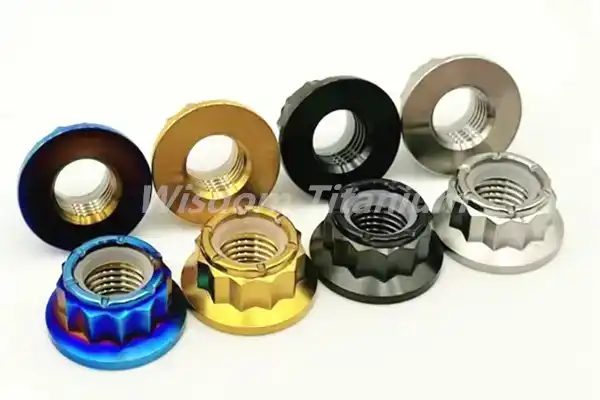
Many engineers, buyers, and service teams in the car, aircraft, and industrial fields want to know if nylon lock nuts can be used again. To keep it short, it depends on the material and what it will be used for a lot. Titanium nylon lock nuts last longer than those made of steel or aluminum. They have a body made of Grade 5 titanium and a nylon core. The cotton plug stops movements by rubbing against the metal, but putting it in and taking it out too many times can make it less sticky. These screws can be used again in some cases, like when there aren't many pressure cycles, there isn't any clear deformation, and the job isn't very important. But they generally need to be changed after every use in places where safety is important to keep things from going wrong badly.
Nylon Lock Nuts Reusability
What Makes Titanium Nylon Lock Nuts Unique?
Titanium nylon lock nuts have a strong nylon core built into the threads of the nut. Grade 5 titanium makes the nuts strong and light. This design creates friction between nuts that fit together. This creates a system that locks itself and won't come open even when it's hit by shocks, shaken, or heated up. It is very hard for the titanium body to rust, especially when it comes to saltwater, chlorides, and industrial chemicals. Another great thing about it is that it is very strong for how light it is. No other material can compare. So, they are great for high-performance racing, naval rigging, and airplane systems where cutting weight makes a big difference in how well they work.
You need to know how something locks to tell if it can be used again. When it's being put together, the nylon plug bends a little to grip the bolt threads tightly. Every time the polymer is tightened, its shape and stiffness change. This makes it less flexible over time. The locking force will be less strong over time because of this wear. This makes it more likely that the clip will come loose while being used. Most of the time, titanium ones last longer than steel ones because the nylon filler doesn't wear down as much when the titanium threads are tightened.
Factors Influencing Lifespan and Reuse Potential
There are several things that can affect whether nylon lock nuts still work after they have been taken off. What's around you is very important. UV rays, high temps, and chemical touch all break down nylon faster. A plant with controlled temperatures is less likely to damage a lock nut than an engine bay with temperatures above 300°F or saltwater spray at sea. Damage from too much torque is another important cause. If you use more force than the manufacturer suggests, the titanium threads and nylon core will always be crooked. This means that the clip can't be used again.
In some fields, like racing and aircraft, safety-critical parts that could fail very badly, like wheel hub systems, brake calipers, or structural structure links, can't be used again. But for non-essential uses like body parts for looks or mounts for extra gear, recovery may be possible after a careful check. However, it is still very important to do what the maker says. Sources you can trust, like Wisdom Titanium, give torque specs and tips on how to reuse parts based on strict testing methods that meet ISO 9001 quality standards.
Comparing Titanium Nylon Lock Nuts to Other Materials Regarding Reusability and Performance
Material Advantages Over Steel and Aluminum Alternatives
The make-up of the material has a direct effect on how long it lasts and how often it can be used. The steel nylon lock nuts are cheap, but they rust in sea or chemicals, which makes the metal body weaker and the nylon break down faster. Steel is stronger than aluminum, but aluminum isn't strong enough for high-stress conditions. Also, its threads are softer, which means that when they are straightened, they damage nylon inserts more quickly. Brass doesn't rust too badly, but titanium is better when it comes to temperature changes or strong movements.
From very cold temperatures to 500°F, titanium nylon lock nuts don't lose their mechanical properties, so they can be used in a wider range of temperatures. The oxide layer that forms on titanium surfaces makes them more resistant to rusting. The electrical processes that cause steel bolts to freeze up or "rust-weld" in saltwater are stopped by this layer. Because of this, it is easy to take off and keeps its shape better than other materials, so it is more likely to be used again.
Torque Specifications and Their Impact on Reusability
How safe it is to use a nylon lock nut again relies on how much force is put on it. The nylon plug doesn't get fully attached when you under-torque. This makes it less resistant to shaking and lets it come loose too soon. When you over-torque, you permanently stretch the fabric past its breaking point, which means it can't close. Titanium doesn't chafe as much as steel, so Grade 5 titanium nylon lock nuts usually need 15–20% less force than steel bolts of the same type.
These are the most important things to keep in mind when installing something with torque:
- Calibrated Tools: Use torque wrenches that are set to within ±4% of the real value to avoid going past what the material can handle.
- Thread Lubrication: When lubricating a thread, don't use too much anti-seize powder. Too much of it lowers the friction between the nylon insert and changes the torque values that are helpful.
- Sequential Tightening: To tighten multi-bolt systems in a way that doesn't cause stress to build up in one area, use cross-pattern steps to spread the locking forces out evenly.
These habits keep fasteners in good shape so they can be used again and again because they lower the amount of wear that happens during each fitting cycle.
Best Practices for Installing and Reusing Titanium Nylon Lock Nuts
Step-by-Step Installation Process
To get the most out of titanium nylon lock nuts, you need to use methodical fitting methods. First, look for damage, dirt, or rust on the threads that fit together. When threads are dirty, nylon doesn't engage properly, and force isn't always the same. Wire brushes or thread chasers can be used to clean threads that are already there. They do not take anything away. Not on the nut threads, but on the bolt shanks. This will keep the nylon plug from galling and the contact in place.
Thread the nut by hand until it gets harder to turn. In other words, the nylon is touching the bolt threads. Switch to a torque wrench that can measure torque and tighten slowly, 25% at a time. This will give the nylon time to stretch between steps. The material doesn't change shape as quickly with this step-by-step method, and the binding force is more stable. As soon as you hit the right level of force, stop. Tightening any more will hurt the nylon insert and not help with binding.
Inspection Criteria Before Reuse
Before you decide to reuse something, you should give it a careful look over that includes these key points:
- Nylon Insert Integrity: Take a close look at the insert to see if it is cracked, crumbling, or missing any parts. You can't use it again if you see any damage.
- Thread Condition: Look for galling, cross-threading, or distortion in titanium threads; even small thread damage makes holding less stable.
- Dimensional Accuracy: To find out the nut's height and thread pitch, use calipers; a change of more than 5% means that the compression will last.
Performance testing tells us things about things we can't see. Just tighten the nut on a bolt that has been measured and check the breaking torque in 24 hours. This is an easy bench test. If it falls below 70% of its original value, the nylon plug is no longer flexible enough and needs to be changed.
Real-World Case Studies
International motorcycle race teams were in a tough spot. They needed to reuse screws to save money, but they also didn't want to take any chances because they were worried about safety. They had different rules for reuse. Every race, you had to change the wheel spindle nuts and brake caliper bolts. But, after being checked, covering bolts that weren't important could be used up to three times. To follow strict safety rules, they got at least 100 hot-forged hex titanium nylon lock nuts from Wisdom Titanium at prices that were competitive for the plant. The price per unit went down because of this.
A company that makes airplanes, on the other hand, found that service workers were using old structural nuts again without following the rules. It turned out that there wasn't enough training and papers. People couldn't reuse things without permission when barcodes were used to keep track of them and replacements were needed. That's proof that process rules and good materials work together to make sure safety.
Conclusion
Titanium nylon lock nuts can be reused in certain circumstances, but you must be extremely careful. While Grade 5 titanium frames are very strong and don't rust, the nylon inserts wear out quickly. Because of this, they can only be used again when risk analysis allows it. Some responsible ways to reuse things are to use measured torque wrenches for the right fitting, test things in a certain way, and follow industry standards. Titanium nylon lock nuts are high-end closures because they are strong, don't react with chemicals, and can handle a wide range of temperatures. The price is worth it because they last a long time and don't need much maintenance. Focusing on good sources, checking certifications, and buying in bulk are all ways to lower the total cost of ownership of an item while having safety gaps that are important for businesses that need them.
Get Premium Titanium Nylon Lock Nuts from a Trusted Supplier
Wisdom Titanium sells aerospace-grade hot-forged hex titanium nylon lock nuts that are made to be used in harsh conditions in the car, racing, and industry sectors. Our Grade 5 titanium screws have great strength-to-weight ratios and naturally don't rust. They come in metric and inch thread sizes from M3 to M24. With a 100-piece minimum order, low factory prices, and a wide range of ready-to-ship things, we give buying teams the freedom they need without losing quality. This is our company in Baoji Titanium Valley. We make titanium nylon lock nuts and have ISO 9001 certification. To help you find the best binding options, we offer full tracking, OEM customization services, and prompt customer service. You can talk to our engineering team about your special needs and get full product specs right away by going to wisdomtitanium.com or emailing sales@wisdomtitanium.com.
FAQs
Can titanium nylon lock nuts be safely reused in automotive brake systems?
Bad things happen when screws fail in places where safety is important, like car stop systems. Most car companies and race groups don't let you use the same titanium nylon lock nuts twice when connecting hydraulic lines, brake discs, or brake caliper bolts. Vibration loads and changes in temperature in braking systems make nylon pieces break down more quickly. During the first use, tiny wear and tear on the material makes the locking less reliable, even if you can't see any obvious damage. The best way to stay safe and avoid risk is still to replace after every breakdown.
What torque specifications should be followed for Grade 5 titanium nylon lock nuts?
Because Grade 5 titanium (Ti-6Al-4V) doesn't stick to steel as well as steel does, torque numbers need to be changed. Most of the time, steel bolts with the same thread size need about 15% to 20% more force than titanium nylon lock nuts. A steel M8 lock nut says 25 Nm, while a titanium M8 nylon lock nut always says 18–20 Nm. Always look at the specs from the maker. At Wisdom Titanium, every order comes with full power charts. The best force relies on the thread pitch, how well it's oiled, and the types of materials that fit together. Do some test units of force and tension before making the whole batch if you don't have exact numbers.
How does temperature affect nylon insert performance in titanium lock nuts?
Standard nylon plugs keep locking up to about 250°F when they are used all the time. Temp changes of up to 300°F may be fine, depending on how long the touch lasts. When these temps are reached, nylon fibers stop being flexible and start to become stiff. Above 400°F, they melt. Titanium is very good at moving heat, which can speed up the breakdown of nylon in hot conditions by moving heat quickly from other parts. If the temperature needs to stay high for a long time, applications should ask for high-temperature nylon versions or look into all-metal locking choices to make sure stable performance across the working range.
References
- Bickford, John H. Introduction to the Design and Behavior of Bolted Joints: Non-Gasketed Joints. CRC Press, 2007.
- Campbell, F. C. Manufacturing Technology for Aerospace Structural Materials. Elsevier Science, 2006.
- Fukuoka, T., and Takaki, T. "Mechanical Behaviors of Bolted Joint During Tightening Using Torque Control." Journal of Pressure Vessel Technology, vol. 120, no. 3, 1998, pp. 274-278.
- Lutjering, Gerd, and James C. Williams. Titanium: Engineering Materials and Processes. Springer, 2007.
- Nassar, Sayed A., and Xianjie Yang. "A Mathematical Model for Vibration-Induced Loosening of Preloaded Threaded Fasteners." Journal of Vibration and Acoustics, vol. 131, no. 2, 2009.
- Society of Automotive Engineers. SAE J995: Mechanical and Material Requirements for Externally Threaded Fasteners. SAE International Standards, 2018.