
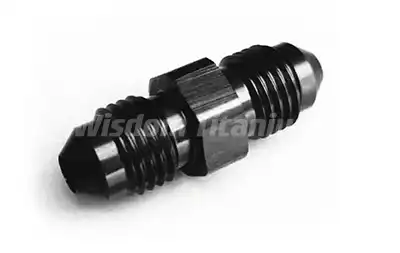
A titanium AN adapter works well in fluid transfer systems when the sealing geometry, pressure range, temperature window, fluid chemistry, and installation method all match the job. Current aerospace and fluid-connection standards show that titanium fittings are used in serious fluid systems, including hydraulic and other aerospace applications. That said, no adapter should be approved by material alone. The full assembly must be checked and tested.
Usage Requirements of the Fluid Transmission System (Hydraulic, Fuel, Cooling, etc.)
Hydraulic, fuel, and cooling systems do not ask for the same thing
The first step is not choosing titanium. The first step is defining the service. A hydraulic circuit may face high pressure, shock loads, and vibration. A fuel line must protect flow stability and sealing integrity. A cooling line may care more about corrosion resistance, heat cycling, and long service life. The company’s aerospace guidance shows that fluid routing for fuel, coolant, and hydraulic service uses different pressure capabilities and design needs. Baoji Wisdom Titanium also notes that pressure, fluid compatibility, temperature changes, and mechanical stress must be checked before selecting a titanium AN adapter.
Standard match comes before material choice
AN connections are popular because they follow a known sealing geometry. SAE states that 37-degree flared fittings are used in fluid power and aerospace fluid systems. That matters because a good material cannot rescue a bad interface. If the flare angle, thread type, or seat design does not match the mating part, leaks become more likely. In practice, buyers should confirm the flare standard, thread standard, tube size, and any transition format such as AN to NPT, AN to ORB, or AN to metric before they approve a part.
Validation decides the final answer
Even when the connection looks correct on paper, system validation still decides the final answer. SAE J514/1 says testing should be reviewed by both the user and the fitting manufacturer to confirm safe and satisfactory performance. That is a useful rule for any buyer. If your assembly involves pulsation, vibration, thermal cycling, or mixed metals, the right question is not only “Can titanium AN adapter be used?” The better question is “Has this exact assembly been validated for my fluid, pressure, and temperature?”
Titanium AN Connector Is Specifically Designed for Fluid Systems
AN geometry exists for real fluid transfer work
A titanium AN adapter is not decorative hardware. It is a fluid connector. SAE AS4841D covers 37-degree flared fittings for use in all types of aerospace fluid systems. SAE AS5958F also covers axially swaged titanium fittings for hydraulic supply and return aerospace fluid systems. In other words, titanium fittings are not a theory in fluid service. They are part of established engineering practice when the design, dimensions, and testing match the duty.
It fits applications where routing, weight, and reliability matter
Search results and supplier documentation point to the same application zones again and again: aerospace, performance automotive, motorsports, marine, and other demanding fluid systems. Baoji Wisdom Titanium’s own technical content describes titanium AN adapters as components for fluid transfer systems and lists straight, elbow, tee, and bulkhead options. The company also shows titanium fluid-routing hardware in aircraft fuel, coolant, and hydraulic service. That overlap is important. It shows why buyers often search terms like titanium hydraulic adapter, titanium fuel line fitting, 37-degree flare adapter, and aerospace fluid fitting together.
Custom integration is often the buying trigger
Many inquiries start with a problem, not a catalog number. The line direction is wrong. The port format changes. The system mixes AN with NPT, ORB, or metric threads. Baoji Wisdom Titanium notes that titanium AN adapters are available in multiple connection styles and transition formats, which helps them fit more complex fluid layouts. For OEM buyers, that matters more than a generic claim of strength. A connector must fit the routing, clear the surrounding parts, and seal under service conditions. That is exactly where custom CNC support becomes valuable.
Supported by the performance of GR5 titanium alloy material
GR5 gives a strong mix of strength and low weight
GR5 titanium, also called Ti-6Al-4V or Grade 5, is widely used because it balances strength, weight, and practical engineering performance. ATI identifies it as the most widely used titanium grade and states that it can be used from cryogenic temperatures to about 800°F (427°C). TIMET lists a density of about 4.42 g/cm³ for its 6-4 alloy. For fluid system hardware, that mix is attractive. It helps engineers reduce weight without moving to a weak material.
Corrosion and fatigue behavior support long service life
Material choice matters most when the fluid system lives in a harsh environment. TIMET says its 6-4 alloy is highly resistant to general corrosion in seawater. The company’s corrosion manual also notes that titanium does not suffer a significant loss of fatigue properties in seawater. Those points help explain why titanium remains attractive in marine, chemical, and weight-sensitive equipment. Still, wise buyers do not oversimplify corrosion. Actual media, contamination, galvanic pairing, and stress state still need review before release.
Material performance helps, but sealing depends on the joint
GR5 is a strong base material. It is not a substitute for connection discipline. The seal still depends on the correct 37-degree interface, the quality of the machined seat, the surface condition, the mating parts, and the assembly method. Baoji Wisdom Titanium’s own guidance stresses system pressure, temperature variation, and mechanical stress. SAE guidance also reminds users to validate safe performance in the actual application. That is why serious buyers judge a titanium AN adapter as both a material choice and a precision connection part.
Structural and connection reliability
Leak resistance starts with machining accuracy
Most fluid fitting failures do not begin with dramatic material collapse. They begin with smaller faults. A damaged flare seat, poor concentricity, thread error, rough sealing surface, wrong torque, or a mismatched mating standard can cause trouble long before the material limit is reached. That is why reliability in a titanium AN adapter depends on precision CNC work, process control, and inspection. In high-performance systems, small dimensional errors can become expensive leaks.
Supplier control reduces buyer hesitation
At the hesitation stage, buyers stop asking only about metal. They ask about the supplier. Baoji Wisdom Titanium Industry and Trading Co., Ltd says it is ISO 9001-certified, was founded in 2016, and supplies standard and customized CNC parts for industries that include aerospace, energy, oil and gas, chemical, marine, automotive, and medical. That profile matters because fluid connectors need more than stock material. They need stable process control, traceable production, and a supplier that can follow drawings closely.
Why Baoji gives this supplier extra credibility
Baoji is not a random manufacturing location. Local government sources describe Baoji and Shaanxi as major titanium and titanium-alloy production bases with a broad industrial chain, strong research support, and a dense cluster of processing and trade enterprises. One Baoji government release in February 2024 said the city had about 600 titanium processing and trading enterprises and that local titanium products were exported to more than 70 countries and regions. For overseas buyers, that ecosystem can improve access to raw material, machining support, and technical coordination.
That regional strength fits Baoji Wisdom Titanium’s offer well. The company focuses on titanium fasteners and customized CNC parts, and your brief confirms that OEM services are available for this product. So, if your project needs a standard or custom titanium AN adapter for hydraulic transfer, fuel routing, oil delivery, or cooling service, the practical next step is simple: send the drawing, thread data, medium, temperature range, pressure range, quantity, and target market. Clear technical input shortens review time and improves quote accuracy.
Contact Baoji Wisdom Titanium at sales@wisdomtitanium.com. If your project needs custom geometry, special thread transitions, or OEM machining support, an inquiry with drawings and service conditions will help the team recommend the right titanium AN adapter faster.
FAQs
Q1: Can one titanium AN adapter be used in hydraulic, fuel, and cooling systems?
A: Sometimes, yes. Often, no. The same adapter style may appear across these systems, but the final choice depends on pressure, temperature, media compatibility, sealing format, and vibration level. Aerospace documentation shows that fuel, coolant, and hydraulic systems each have different design demands, so buyers should verify the exact application before approval.
Q2: Is a titanium AN adapter always better than stainless steel?
A: Not always. Titanium offers strong weight savings and excellent corrosion resistance, and Grade 5 is widely used in demanding industries. But the best material still depends on system goals, mating materials, budget, and validation needs. If weight reduction and corrosion resistance matter, titanium often becomes very attractive. If cost is the main driver, another alloy may be chosen.
Q3: What information should I send when asking for a quote?
A: Send the drawing, thread standard, tube or hose size, fluid type, pressure range, temperature range, quantity, finish requirement, and target market. If the adapter must convert from AN to NPT, ORB, or metric, include both ends clearly. This saves time and lowers the risk of a sealing mismatch. Baoji Wisdom Titanium also states that custom CNC support is part of its business model.
Q4: Can Baoji Wisdom Titanium support OEM fluid system parts?
A: Yes. According to the company’s profile, Baoji Wisdom Titanium supplies standard and customized CNC parts and serves multiple industrial sectors. Your product brief also states that OEM service is available for the titanium AN adapter. That makes the company a reasonable contact point for both standard and custom fluid transfer components.
References
- SAE International, AS4841D: Fittings, 37 Degree Internal Flare, Fluid Connection, Procurement Specification.
- SAE International, J514/1_202211: Metallic Connections for Fluid Power and General Use - Part 1: 37 Degree Flared Fittings.
- ATI, Ti-6Al-4V, Grade 5 alloy datasheet.
- TIMET, TIMETAL 6-4 datasheet and Corrosion Resistance of Titanium.
- Baoji Wisdom Titanium, About Us and What connection types are available with Titanium AN adapters?.