
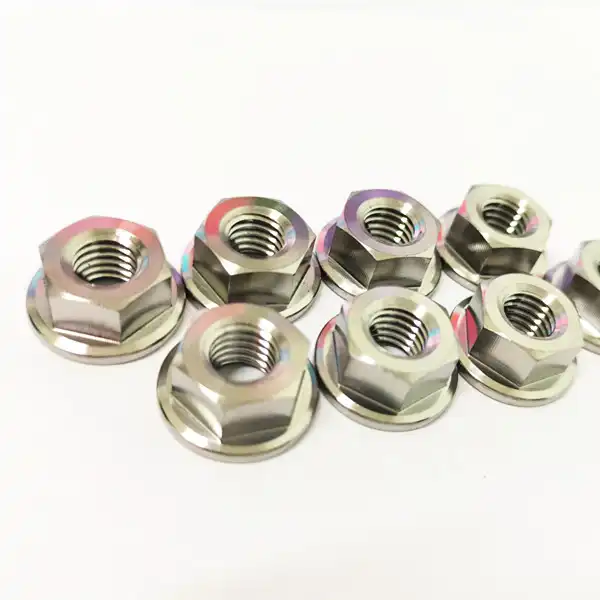
A lot of experts and people who buy things ask, "Can I switch a flange nut for a standard hex nut?" when they need to get something put together quickly or because they're out of stock. The short answer is no, especially when you need DIN 6923 titanium hex flange nuts to do tricky jobs. The combined flange design changes how the load is spread, how well it stops vibrations, and how stable the system is. Both bolts clamp. The risks of using a regular nut instead of a flange nut are much higher than any benefits or cost savings that might be thought of. This is especially true for race suspensions, marine equipment, and airplane parts. If you want to keep safety and efficiency high, you should know why these screws are different.
Core Differences Between Regular Nuts and Flange Nuts
These two types of nuts may look the same at first glance, but they are used for very different things in engineering. A normal hex nut can grip the thread and hold it in place, but only if the part it's attached to has a flat side that touches it. The pressure is focused on this small area of contact, which could lead to the nut becoming lodged in metal or composite surfaces over time.
The Role of the Integrated Flange
A wide collar that looks like a screw is at the bottom of a flange nut. There is a lot more surface area under this collar, so it can hold more things. This design gets rid of the need for different washers. This cuts down on the steps needed to put something together and stops washer loss, which happens a lot when building something complicated. There are grooves on the bottom of the flange that bite into the mating surface to stop shaking from making the turning free. This is a trait that is useful in cars, planes, and bikes.
What DIN 6923 Standards Define
The DIN 6923 titanium hex flange nuts standard spells out exactly what hex flange nuts should be made of and how big they can be. When nuts are made to this standard, they have to meet strict rules about the thread size, the width of the lip, and the thickness. These screws are made from Grade 5 titanium (Ti-6Al-4V), which has a high strength-to-weight ratio and the flange form that helps spread load. Titanium of grade 5 can hold more than 950 MPa of tension and is 45% lighter than steel parts of the same size. Because of this, it is an important material in places where stress and weight are high.
Why Titanium Changes the Equation
Titanium doesn't rust because it has a natural metal layer on it. This is especially useful in military settings where saltwater can cause stainless steel screws to rust. If this layer gets scratched, it fixes itself right away. This keeps the device safe for as long as it's being used. Aside from that, titanium doesn't lose many of its functional properties when it gets very hot or very cold. It can work nonstop at temperatures as high as 400°C and still keep most of its power. These fasteners are the best choice for places like chemical plants, offshore oil rigs, and high-performance race teams that need to keep their parts running well and protect them from the weather.
Can You Substitute a Regular Nut for a DIN 6923 Titanium Hex Flange Nut?
There are big technical problems that can happen if you use a normal nut instead of a DIN 6923 titanium hex flange nuts. It might look like a quick fix. What happens if you take away the flange's ability to share load and lock in vibration? That's what makes the choice.
Reduced Contact Area and Stress Concentration
When the nut doesn't have the lip, the holding force is focused on a much smaller area. This concentrated load can change the shape of the surface when fitting into lighter materials like magnesium engine parts or carbon fiber body panels. When this movement keeps happening because of temperature changes or dynamic loading, the joint loses its preload and comes loose in the end. Wheel hub systems are put through a lot of side forces and vibrations during races, and this loss of locking integrity can cause them to fail completely.
Increased Risk of Vibration Loosening
These flange nuts have toothed edges on the bottom that stop them from spinning, even when the nut is moving around. Most nuts don't do this; to keep the tension up, they only use thread friction and loading. It has been found by race engineering teams that regular nuts used in suspension bearing points can lose up to 30% of their preload after only 500 miles of rough use. With flange nuts, on the other hand, the pressure stays the same even after thousands of miles of heavy use.
Material Compatibility and Environmental Factors
Galvanic rusting can happen when parts made of aluminum or magnesium are joined together with nuts made of steel or stainless steel instead of titanium. Titanium doesn't rust as easily as these lighter metals do, so electrical processes that break down materials more quickly are less likely to happen. This difference in how well they work together is very important in military and marine settings. Titanium fasteners don't need any coats to last for years, while stainless steel fasteners often freeze up or rust within months.
Real-World Case Evidence
Fod (foreign object debris) can't get between the washers and into the engine ports because of the shape of the combined washer. This is why aerospace companies use flange nuts on engine cowlings and access panels. When motorcycle race teams changed the nuts on the bolts for the brake calipers to titanium fasteners, the number of cases involving brake fade caused by hardware coming loose went down. When owners of offshore wind farms switched to titanium flange nuts for tower access platforms that were exposed to salt spray, they had to replace fasteners 70% less often.
In low-stress, non-critical cases, these results make it clear that replacement is technically possible. But it's too risky to do when safety, performance, or long-term trustworthiness are at stake.
How to Choose the Right Nut for Your Industrial Application?
If you want to get the best screws, you need to think about a few things and then compare them to what the product needs. Engineers and people in charge of buying can meet the goals of the project better if they know about these trade-offs regarding DIN 6923 titanium hex flange nuts.
Evaluating Mechanical Requirements
First, check how the joint is loaded: is it static or moving? Check how much it shakes, how the temperature changes, and how much loading it needs. When there is a lot of shaking, like in motorcycle engines, race suspensions, and industrial tools, flange nuts need to be able to lock themselves. For systems that don't move and are kept in a controlled environment, regular nuts with the right locking chemicals or separate washers might work.
Assessing Environmental Exposure
Places outside, in the marine environment, or where chemicals are present need very strong rust protection. Titanium hex flange nuts work best in these conditions, but stainless steel nuts might work fine inside, where the humidity is better controlled. In some low-strength cases, the ability of brass and metal nuts to conduct electricity or stop sparks from happening is more important than how well they work mechanically.
Weight Considerations for Performance Applications
Racing teams, airplane experts, and speed car shops all want to cut down on the weight of rotating and unsprung mass systems. Titanium is 45% lighter than steel, which makes it easier to drive, faster, and with less gas use. If you want to compare titanium to stainless steel, you should find out how much weight each bolt will save. Because it works better, the difference in weight saves can often make up for the higher cost of the material.
Price and Supply Chain Factors
Titanium screws are priced based on how much the raw materials cost, what skills are needed to make them, and how the quality is checked. When you're looking for these nuts, you should compare the price at first to the costs over time, like how many times you'll have to replace them, fix them, or fix them incorrectly. Because they are reliable and have ISO 9001 certification and well-established warehouse systems, there is less chance of waiting times. They also make sure that batches are the same, which is important for production plans and quality management systems.
Conclusion
Use a DIN 6923 titanium hex flange nuts instead of a regular nut. If you don't, the joint won't be as strong, safe, or reliable over time or in tough situations. The combination flange's shape stops vibrations and spreads pressure in a way that different nuts and washers can't. Titanium is strong for its weight, doesn't rust, and stays stable at high and low temperatures. These properties make titanium screws necessary in chemical processing, aircraft, racing, and naval settings. They cost more than regular screws at first, but they are worth it in the long run because they last longer, weigh less, and need less maintenance. People who want to buy things should look for certified providers that offer materials that can be tracked, exact measurements, and professional help to make sure the assembly goes easily and operations are safe.
Partner with Wisdom Titanium for Premium Fastener Solutions
In Baoji Titanium Valley, Wisdom Titanium makes DIN 6923 titanium hex flange nuts and is ISO 9001 approved. There are many types of fasteners they sell, and they can fully track all of their products. The tensile strength of our Grade 5 titanium nuts is over 950 MPa, and they don't rust at all. Companies all over the world use them in racing, business, airplanes, and the sea. With a minimum order size of just 200 pieces and the ability to make changes for non-standard needs, we can meet the needs of both idea development and high-volume production. In order to make sure the assembly goes smoothly, our skilled technical team gives clear installation directions, torque specs, and advice based on the job. Email sales@wisdomtitanium.com to talk about your project and get full quotes with prices and wait times that are easy to understand.
FAQs
What Makes Flange Nuts Better Than Regular Nuts?
When you put two flange nuts together, they hold them together better because they have a washer-like ring built in. There is no longer a need for different washers because the material does not change shape. The bottom is grooved, which locks it in place mechanically and stops it from coming loose from movements. If you use your car, motorcycle, or any other machine that is subject to dynamic loads, this is very important regarding DIN 6923 titanium hex flange nuts.
Can Titanium Hex Flange Nuts Withstand High Temperatures?
Grade 5 titanium can stay in shape for a long time at temperatures as low as -196°C and as high as 400°C. Titanium fasteners work great in exhaust systems, engine parts, and industrial equipment that is heated up to very high temperatures because they don't grow or shrink when heated or cooled. Steel fasteners might have problems in these places.
How Do I Verify Supplier Certification?
Ask for ISO 9001 certificates, material test reports that use spectrometry to show the chemical make-up of the material, and records of checks that were done with accurate thread gauges to make sure the measurements are correct. Manufacturers with a good name give full tracking paperwork that links raw material batch approvals to finished fasteners.
Do Titanium Fasteners Require Special Installation Procedures?
Because titanium has a high friction coefficient, it needs anti-seize agents made of copper or nickel to keep it from galling while it is being installed. Make sure you use about 70–80% of the force needed for steel screws on titanium threads, while taking into account the type of lube also.
References
- German Institute for Standardization. "DIN 6923: Hexagon Flange Nuts." Standards Specification for Fasteners, 2018.
- Boyer, R., Welsch, G., and Collings, E.W. "Materials Properties Handbook: Titanium Alloys." ASM International, 1994.
- Bickford, John H. "An Introduction to the Design and Behavior of Bolted Joints." CRC Press, 2007.
- Donachie, Matthew J. "Titanium: A Technical Guide." ASM International, 2000.
- Society of Automotive Engineers. "SAE J429: Mechanical and Material Requirements for Externally Threaded Fasteners." SAE Technical Standards, 2014.
- Metals Handbook Committee. "Corrosion Resistance of Titanium and Titanium Alloys in Marine Environments." ASM Handbook Volume 13B: Corrosion Materials, 2005.