
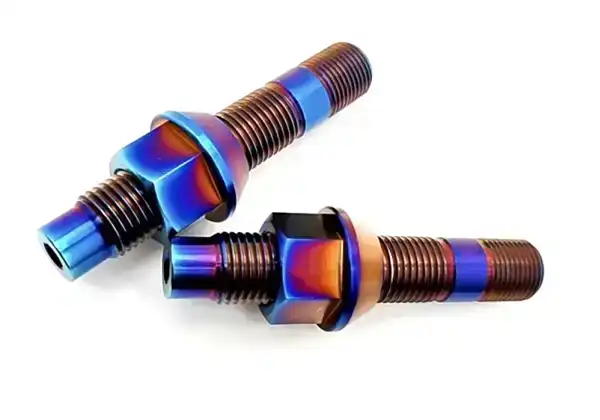
Absolutely, titanium wheel stud nuts are exceptional fastening solutions for demanding applications. Manufactured from aerospace-grade Ti-6Al-4V (Grade 5) titanium alloy, these components deliver tensile strength exceeding 950 MPa while weighing 45–50% less than conventional steel equivalents. The combination of superior corrosion resistance, fatigue endurance, and lightweight construction makes titanium wheel stud nut assemblies ideal for high-performance motorsports, premium automotive manufacturing, and industrial environments where component reliability directly impacts operational safety and efficiency.
Understanding Titanium Wheel Stud Nuts: Benefits and Key Features
Titanium wheel stud nuts represent a paradigm shift in fastener technology, particularly within sectors where every gram of weight reduction translates to measurable performance gains. Unlike traditional steel bolts that focus on brute strength at the cost of mass or aluminum options that trade off durability for weight, titanium alloy nuts occupy the optimal intersection of both requirements.
What Makes Titanium Alloy Fasteners Superior?
The fundamental advantage stems from the structure and properties of titanium itself. Aerospace-grade Ti-6Al-4V alloy contains approximately 6% aluminum and 4% vanadium, creating a microstructure that exhibits exceptional strength-to-weight ratios. These titanium wheel stud nuts instantly lower unsprung mass—the weight not supported by a vehicle's suspension system. With a density of just 4.43 g/cm³ compared to steel's 7.85 g/cm³, reduction in unsprung mass directly improves suspension responsiveness, allowing dampers to control wheel movement more effectively during dynamic driving conditions.
Beyond weight savings, titanium's natural oxide layer provides remarkable corrosion resistance. When steel bolts are exposed to road salts, moisture, and temperature fluctuations, they develop rust that compromises thread integrity and torque retention. Aluminum, while lighter, suffers from galvanic corrosion when paired with dissimilar metals in wheel assemblies. Titanium remains chemically inert across virtually all environmental conditions, maintaining structural integrity even after years of saltwater exposure in marine transport or coastal driving scenarios.
Mechanical Performance Under Extreme Conditions
Racing teams and performance modification shops prioritize titanium wheel stud nuts specifically for their fatigue resistance. During high-speed cornering or braking events, wheel assemblies experience cyclical loading that can exceed 10,000 stress cycles per hour. Steel nuts may exhibit microcrack formation under these conditions, particularly when subjected to vibrational frequencies that induce resonance. Titanium's superior fatigue limit ensures crack propagation remains minimal even at stress levels approaching 60% of ultimate tensile strength.
Hardness ratings around 36 HRC provide an optimal balance between surface durability and ductility. Overly hard fasteners become brittle and prone to sudden failure; excessively soft materials deform under torque application. Titanium maintains thread form integrity throughout repeated installation cycles while absorbing impact energy that would otherwise transmit through wheel bearings and suspension components.
Maintenance and Longevity Considerations
Proper care extends the already impressive service life of titanium wheel stud nuts. Unlike steel fasteners requiring anti-seize compounds to prevent thread galling, titanium's low friction coefficient naturally resists seizing when mated with aluminum or steel hubs. Periodic inspection should focus on torque verification using calibrated wrenches—typically 85–100 ft-lbs for M14 applications depending on wheel material and manufacturer specifications.
Cleaning procedures differ substantially from steel maintenance protocols. Avoid abrasive cleaners or wire brushes that might damage the protective oxide layer. Mild soap solutions and soft-bristle brushes effectively remove brake dust and road grime without compromising surface integrity. The self-healing oxide layer regenerates naturally when exposed to oxygen, maintaining corrosion resistance throughout the fastener's operational life.
Titanium vs Other Materials: Making the Right Choice for Procurement
Procurement decisions require comprehensive analysis beyond initial purchase price. While titanium wheel stud nuts command premium costs compared to steel or aluminum alternatives, total cost of ownership calculations often favor titanium across extended service intervals.
Comparative Material Analysis
Steel lug nuts dominate OEM applications due to low material costs and widespread manufacturing infrastructure. Grade 8 carbon steel fasteners offer tensile strengths around 150,000 psi (1,034 MPa), comparable to titanium on paper. However, steel's density penalty negates performance advantages in weight-critical applications. Stainless steel variants improve corrosion resistance but increase costs substantially while still carrying the mass disadvantage.
Aluminum presents an interesting middle ground—density of 2.70 g/cm³ provides weight savings approaching titanium levels at significantly lower material costs. The compromise becomes apparent under load analysis: 7075-T6 aluminum, the strongest commonly available grade, achieves tensile strengths around 572 MPa—nearly 40% lower than Ti-6Al-4V. Racing organizations and performance builders consistently report thread stripping and deformation issues when aluminum fasteners experience repeated high-torque installations or emergency roadside wheel changes.
Return on Investment in Professional Applications
Racing teams operating under strict weight regulations view titanium wheel stud nuts as mandatory equipment rather than optional upgrades. Formula racing regulations often impose minimum vehicle weights that teams struggle to achieve while incorporating safety equipment and performance components. Saving 200–300 grams per wheel assembly through titanium hardware allows engineers to reposition ballast for optimal weight distribution, directly improving lap times through enhanced handling characteristics.
Commercial fleet operators serving coastal regions or winter climates recognize different value propositions. Steel lug nuts on delivery vehicles or utility trucks require replacement every 18–24 months due to corrosion-induced thread damage. Titanium alternatives routinely exceed five-year service intervals in identical conditions, reducing maintenance downtime and parts inventory carrying costs. Although unit prices may triple compared to steel, the extended replacement cycle and elimination of roadside failures generate positive ROI within the second service interval.
Certification and Quality Verification
B2B procurement teams should prioritize suppliers maintaining ISO 9001 certification and providing material traceability documentation. Authentic Grade 5 titanium exhibits specific chemical composition—approximately 90% titanium, 6% aluminum, 4% vanadium, with trace elements below 0.4% combined. Positive Material Identification (PMI) testing using X-ray fluorescence spectrometry confirms alloy composition, distinguishing genuine aerospace-grade material from inferior substitutes or pure titanium (Grade 2) that lacks necessary strength characteristics.
Thread precision directly impacts torque retention and hub compatibility. Rolled threads exhibit superior fatigue resistance compared to cut threads, as the manufacturing process aligns grain structure along thread contours rather than severing material continuity. Go/No-Go gauge verification ensures thread pitch accuracy within 6g tolerance class, preventing cross-threading during installation and guaranteeing proper engagement with hub studs.
How to Choose the Best Titanium Wheel Stud Nuts for Your Needs?
Selecting appropriate titanium wheel stud nuts requires matching technical specifications to application requirements while balancing budget constraints against performance objectives.
Critical Selection Parameters
Thread sizing represents the foundational specification—M12 and M14 metric threads dominate European and Asian automotive markets, while 1/2-20 UNF threads remain standard across American vehicles. Procurement teams must verify hub stud dimensions and thread pitch before ordering, as mismatched fasteners create catastrophic safety risks. Custom thread options accommodate specialized equipment or vintage vehicle restoration projects requiring non-standard dimensions.
Nut head configurations influence tool compatibility and aesthetic preferences. Hex (six-point) designs offer universal wrench compatibility and maximum contact area for torque application. Twelve-point heads allow socket engagement at 30-degree intervals rather than 60-degree positioning, beneficial in tight clearance situations around brake calipers or suspension components. Torx drive interfaces prevent unauthorized removal while distributing rotational forces across multiple engagement points, reducing the likelihood of rounded corners during high-torque installations.
Finish Options and Functional Considerations
Surface treatments serve both protective and aesthetic purposes. Raw titanium finish preserves material purity and minimizes cost, suitable for applications where appearance remains secondary to function. Anodized colors—including burnt blue, black, gold, red, and rainbow finishes—create distinctive visual appeal for show vehicles and custom builds while adding minimal thickness (typically 5–25 microns) that doesn't compromise thread tolerances.
Physical Vapor Deposition (PVD) coatings like Diamond-Like Carbon (DLC) increase surface hardness beyond 70 HRC, reducing friction coefficients to approximately 0.1 and eliminating the need for anti-seize compounds. Racing applications benefit particularly from DLC-coated titanium wheel stud nuts, as the ultra-hard surface resists galling under repeated pit stop wheel changes while maintaining precise torque readings.
Bulk Purchasing Strategies
Wholesale procurement offers substantial per-unit savings while ensuring consistent specifications across fleet operations or production runs. OEM manufacturers typically negotiate volume pricing based on annual consumption forecasts, receiving dedicated inventory allocation and priority production scheduling. Establishing relationships with ISO-certified suppliers like Wisdom Titanium provides access to engineering support for custom specifications, material certifications meeting international standards, and quality assurance documentation required for regulatory compliance.
Minimum order quantities vary by supplier and specification complexity. Standard thread sizes and head configurations often carry lower MOQ thresholds (100–500 pieces), while custom dimensions or specialized finishes may require commitments exceeding 1,000 units to justify tooling expenses and setup costs. Strategic buyers coordinate procurement timing with production schedules, avoiding rush charges associated with expedited manufacturing while maintaining adequate safety stock for operational continuity.
Conclusion
Titanium wheel stud nuts deliver measurable advantages across automotive, motorsports, and industrial applications where component weight, corrosion resistance, and fatigue endurance directly impact operational performance and lifecycle costs. The initial investment premium compared to steel alternatives becomes justified through extended service intervals, reduced maintenance requirements, and performance improvements in weight-critical scenarios. B2B procurement teams should prioritize suppliers maintaining ISO certification, providing comprehensive material traceability, and offering technical support for application-specific requirements. Proper installation techniques and maintenance protocols maximize these benefits, ensuring titanium fasteners deliver reliable service across demanding environmental conditions and operational stresses.
FAQ
Are titanium lug nuts suitable for heavy-duty commercial vehicles?
Grade 5 titanium wheel stud nuts meet or exceed the tensile strength requirements for most commercial vehicle applications, with 950+ MPa ratings comparable to Grade 8 steel. However, procurement decisions should consider specific load conditions and regulatory requirements. Fleet managers should verify that titanium specifications align with manufacturer torque ratings and safety standards applicable to commercial transport. The corrosion resistance proves particularly valuable for delivery vehicles operating in coastal regions or winter climates where salt exposure accelerates steel deterioration.
How does weight reduction affect vehicle dynamics?
Reducing unsprung mass through titanium wheel stud nuts improves suspension performance by allowing dampers to control wheel movement more effectively. Each 100 grams removed from wheel assemblies can produce handling improvements equivalent to 10–15% stiffer springs without ride quality penalties. Racing applications prioritize this advantage, but street vehicles also benefit through improved ride comfort and steering responsiveness. The cumulative weight savings across all four wheels typically ranges from 800–1,200 grams depending on fastener quantity and original equipment specifications.
What is the expected service life compared to steel alternatives?
Titanium wheel stud nuts routinely exceed five-year service intervals in harsh environmental conditions where steel counterparts require replacement every 18–24 months due to corrosion. The self-healing oxide layer maintains structural integrity indefinitely under normal operating conditions, with thread wear becoming the primary limiting factor rather than material degradation. Racing applications experiencing frequent installation cycles may see reduced service life due to mechanical wear, though titanium still outlasts aluminum alternatives by substantial margins.
Partner with a Trusted Titanium Wheel Stud Nut Manufacturer
Wisdom Titanium delivers precision-engineered titanium wheel stud nut solutions backed by ISO 9001 certification and comprehensive quality assurance protocols. Located in Baoji Titanium Valley, Shaanxi Province—China's premier titanium manufacturing hub and one of the world's most advanced titanium production clusters—we leverage vertically integrated supply chains spanning raw material processing through CNC finishing. Our Ti-6Al-4V (Grade 5) fasteners meet aerospace specifications with tensile strengths exceeding 950 MPa, available in thread sizes including M12, M14, and 1/2-20 with customization options for specialized applications. Whether you require bulk procurement for OEM production, custom finishes for performance builds, or technical consultation for application-specific requirements, our experienced engineering team provides responsive support throughout the procurement process. Contact our team at sales@wisdomtitanium.com to discuss volume pricing, specification development, and delivery schedules aligned with your operational timeline.
References
- Boyer, R., Welsch, G., & Collings, E.W. (1994). Materials Properties Handbook: Titanium Alloys. ASM International, Materials Park, Ohio.
- Donachie, M.J. (2000). Titanium: A Technical Guide (2nd Edition). ASM International, Materials Park, Ohio.
- Lutjering, G., & Williams, J.C. (2007). Titanium (2nd Edition). Springer-Verlag, Berlin Heidelberg.
- Society of Automotive Engineers (2019). SAE J1701: Lug Nuts and Wheel Studs - Installation and Torque Specifications. SAE International, Warrendale, Pennsylvania.
- American Society for Testing and Materials (2021). ASTM B348-21: Standard Specification for Titanium and Titanium Alloy Bars and Billets. ASTM International, West Conshohocken, Pennsylvania.
- Schutz, R.W., & Watkins, H.B. (1998). "Recent developments in titanium alloy application in the energy industry." Materials Science and Engineering: A, Volume 243, Issues 1-2, Pages 305-315.