
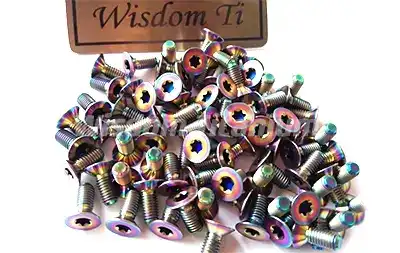
Titanium wheel bolts are very safe as long as they are made according to the right standards and are put on the wheel properly. These specialized screws, like titanium steering wheel bolts, are made from an aerospace-grade titanium alloy, usually Grade 5 Ti-6Al-4V, which has a tensile strength of more than 950 MPa. This amount of strength is the same as or higher than that of standard steel fasteners, but it is 45% lighter. Titanium doesn't rust, so it doesn't have to worry about breaking down from rust. This is a huge safety benefit in places where water, road salt, or driver sweat are present. Titanium bolts are used by racing teams, high-performance automotive manufacturers, and shops that modify motorcycles because they keep their structural integrity under extreme shaking, heat cycling, and dynamic loads that would weaken bolts made of other materials.
Titanium Wheel Bolts vs. Competing Materials: A Comparative Analysis
To choose the right bolt materials, you need to know how to balance weight, strength, longevity, and cost. This study looks at how titanium stacks up against other materials that are often used in car uses.
Weight Savings and Performance Impact
Titanium is the strongest useful anchor material in terms of its weight-to-strength ratio. A full set of titanium steering wheel bolts weighs about 45% less than the same set of steel bolts. Even though a small decrease in the weight of a single bolt may not seem like much, the savings from all of the fasteners on a vehicle add up to better power-to-weight ratios, acceleration response, and fuel economy.
Aluminum bolts are about the same weight as steel bolts, but they are not as strong or last as long. The lower tensile strength of the material means that bigger sizes are needed to get the same load capacity, which often cancels out the weight savings. When threaded into aluminum hubs, aluminum tends to gall, which makes upkeep hard and raises dependability issues that aren't acceptable in safety-critical applications.
Durability and Maintenance Requirements
Titanium is very resistant to wear, which means that it doesn't need to be serviced as often and costs less over its lifetime. In the lab, wear tests show that titanium bolts can withstand more than a million load cycles at stress levels that would break steel after only 100,000 cycles. For example, this durability is very useful in places with a lot of vibration, like off-road cars and races.
When protection layers on carbon steel screws wear off over time, the base metal becomes vulnerable to corrosion. Stainless steel is better at resisting rust, but it is also weaker and more likely to get thread galling. Neither metal can match titanium's ability to resist rust, keep its strength, and be easy to maintain.
Cost Versus Performance Trade-offs
Titanium screws are very expensive because of the high cost of the materials, the special skills needed to make them, and the strict rules for quality control. Professionals in procurement have to decide if the performance benefits are worth the initial expense. Analysis shows that titanium's longer service life, lack of corrosion-related problems, and ability to reduce weight often result in a good total cost of ownership, even though the unit prices are higher.
For uses that aren't too expensive, steel screws with the right coatings may be enough in places where rust isn't a big problem. The right material should be chosen after a careful cost-benefit analysis that takes into account the expected service life, upkeep needs, and performance goals.
Installation and Maintenance of Titanium Wheel Bolts
When titanium wheel bolts are installed correctly, they provide the safety and efficiency benefits that were meant. Not using the right amount of pressure, not properly preparing the threads, or using oils that don't work well with fasteners can all make them less reliable.
Installation Procedures and Torque Specifications
Because titanium has different friction properties than steel bolts of the same size, it needs different pressure values. Too much torque can damage the oxide layer or stretch the threads, while not enough torque lets them loosen up when the machine shakes. Torque requirements for M5 titanium bolts are usually between 5 and 6 Nm, but they can be different depending on the purpose and the length of the thread engagement.
Applying torque should be done in the right order to make sure that the holding force is spread out evenly. To be sure of their accuracy, use torque wrenches that have been adjusted and checked within the last year. Tighten titanium steering wheel bolts in star designs for multi-bolt systems, but don't apply full torque all at once. Instead, do it in two or three steps. This process evens out the surfaces that are joining, which stops them from bending or concentrating stress.
Maintenance Best Practices
As part of regular checks, bolt heads should be checked for damage caused by overtorque, thread condition, and correct fitting. A visual check shows if PVD rainbow coats have wear patterns that show movement or bad fitting. Check torque values on a regular basis, especially after the first few days of use when parts may settle down.
Thread inspection tools check the state of the threads before they are put back together. If you can see thread damage, lengthening, or deformation on a bolt, you should replace it. In contrast to steel screws, which can handle small flaws, titanium's safety-critical uses call for strict replacement rules. Proactive maintenance programs work better when specific service logs are kept that record installation dates, torque values, and check results.
Procuring Titanium Wheel Bolts: What B2B Buyers Need to Know?
Choosing where to buy something has a big effect on the quality of the product, how reliable the service is, and the total cost of buying it. Knowing what a provider can do, what certifications are needed, and how the market is changing can help you make smart buying decisions.
Manufacturer Selection and Certification
Manufacturers who are ISO 9001-certified show that they are dedicated to quality management systems that make sure that product standards are always met. Baoji Wisdom Titanium Industry and Trading Co., Ltd., which was established in 2016 and is based in Baoji Titanium Valley, Shaanxi Province, is a good example of a recognized provider that follows strict quality rules. This area is home to China's biggest titanium industry center. It has the whole supply chain, from making titanium sponges to making finished fasteners.
The output skills of a supplier show if they can meet specific needs. With CNC machining skills, you can precisely control the tolerances for thread pitch accuracy, countersunk profiles, and Torx drive holes. Manufacturers that offer PVD rainbow coating services can customize the way the surface looks and make it harder at the same time.
Pricing Models and Bulk Purchasing
Titanium fastener prices depend on how much the materials cost, how hard they are to machine, how they are coated, and how many are ordered. Most of the time, buying in bulk leads to big price cuts per unit. In order to balance the needs of customers with the ease of production, minimum order amounts usually begin at 100 pieces. With factory-direct pricing, there are no markups for distributors, so you get low prices that are especially helpful for buying in bulk.
Most volume price systems offer discounts of varying amounts at 100, 500, and 1,000 pieces. When comparing providers, people who work in procurement should add up the total cost, which should include shipping, any duties that might apply, the cost of keeping goods, and titanium steering wheel bolts. For enough volume, domestic suppliers may offer faster delivery and easier operations, while foreign sources may offer lower unit prices that cover shipping costs.
Customization Capabilities
Standard DIN 7991 M5×12 and M5×15 titanium bolts with T25 Torx drive can be used in a lot of situations, but sometimes unique needs call for custom specs. Manufacturers who are capable can handle different lengths, head styles, drive configurations, and finishing choices. Custom PVD coats in colors other than rainbow, like gold, black, or blue, let you match the look of your vehicle's color scheme or name.
Thread changes: In order to fit bolts to non-standard sizes or left-handed threads, CNC code needs to be changed. Custom specs usually add two to four weeks to the time it takes to deliver a standard product. However, established makers who can do a lot of different kinds of machining may be able to meet urgent needs more quickly. Misunderstandings that could slow down production can be avoided by using clear technical models and explaining the accuracy requirements in detail.
Conclusion
In conclusion, titanium wheel bolts are proven to be safe because they have better material qualities, are less likely to rust, and work better after being used for a long time than other fastener materials. These parts are great for demanding car, motorbike, and race uses where dependability can't be compromised because they are strong, don't weigh much, and last a long time. When you put something correctly by following the torque instructions and doing regular maintenance, the service life and safety benefits are at their best. Even though they cost more at first than regular steel fasteners, total ownership research shows that they are more cost-effective in the long run because they last longer, don't rust, and work better. As the trend toward lighter cars grows and the cost of making them goes down, titanium fasteners move from being a niche product to a standard option for makers and speed fans who value safety and excellence.
Partner with Wisdom Titanium for Premium Titanium Fastener Solutions
Wisdom Titanium sells approved titanium steering wheel bolts that are made to strict DIN 7991 standards at factory-direct prices. Aerospace-grade Grade 5 Ti-6Al-4V material and precise CNC machining go into our M5×12 and M5×15 bolts with a T25 Torx drive and a PVD rainbow finish. This makes sure that automakers, race teams, and repair shops always get the same high-quality products. We keep a lot of stock in Baoji Titanium Valley, which is China's best place to make titanium products. We can handle orders of up to 100 pieces, and our bulk prices are cheap, and we can ship right away. Our ISO 9001-certified center helps a wide range of businesses by making custom CNC parts and offering full titanium fastener solutions with expert technical support. Wisdom Titanium has the knowledge and supply chain security that B2B titanium steering wheel bolts sellers need, whether they're looking for standard parts or making custom specs. Get in touch with our team at sales@wisdomtitanium.com or visit wisdomtitanium.com to talk about your buying needs and improve your projects with high-quality titanium fasteners.
FAQ
Can titanium wheel bolts be reused after removal?
Titanium screws can usually be used again as long as the threads are still good and the bolts haven't been stretched past their release point. Carefully look at the threads under a microscope to see if they are galling, cross-threading, or elongating. Replace any nuts that are bent or broken. Before reinstalling, use new anti-seize powder and check the power specs.
How do titanium bolts perform in extreme temperature conditions?
Titanium stays strong at temperatures ranging from -200°C to 400°C, which is better than aluminum and many steels. The low thermal expansion rate of the material keeps it from coming loose during thermal cycles. This temperature steadiness is especially helpful for racing brake systems and exhaust uses.
What is the expected lifespan of titanium wheel bolts compared to steel?
When used normally, titanium bolts can last three to five times longer than steel ones. Corrosion immunity stops the rust-related damage that shortens the life of steel fasteners. In uses with a lot of shaking, fatigue resistance makes the service life longer. The actual lifespan relies on how well it was installed, how well it was maintained, and how harsh the working environment is.
References
1. Boyer, R., Welsch, G., & Collings, E.W. (1994). Materials Properties Handbook: Titanium Alloys. ASM International, Materials Park, Ohio.
2. Donachie, M.J. (2000). Titanium: A Technical Guide, 2nd Edition. ASM International, Materials Park, Ohio.
3. SAE International (2018). SAE J1199: Technical Report on Low Carbon and Alloy Steel Mechanical Spring Wire and Springs. Society of Automotive Engineers, Warrendale, Pennsylvania.
4. Veeck, S. & Herbst, S. (2017). Lightweight Fastening Technology for Automotive Applications. ATZ Worldwide, Volume 119, Issue 6, pp. 58-63.
5. Lutjering, G. & Williams, J.C. (2007). Titanium, 2nd Edition. Springer-Verlag, Berlin Heidelberg.
6. Baragetti, S. & Villa, F. (2014). Effects of Geometrical Features on the Fatigue Strength of PVD Coated Components. International Journal of Fatigue, Volume 63, pp. 39-50.