
Every part of a car is important for safety, but the steering gear is especially important. Titanium steering wheel bolts are becoming more popular among performance fans, race teams, and high-end automakers. But when it comes to B2B buying, there is one question that keeps coming up: Are they really safe? This guide answers that question directly, making it easier for automakers, modification shops, fleet managers, and aftermarket providers to choose between traditional fasteners and titanium options. When it comes to driving systems, where a broken part can have terrible results, safety and dependability are musts. Knowing the titanium bolts' material qualities, performance standards, and buying standards can help you make choices that balance reducing weight, making the bolts last longer, and following the rules. This in-depth study will give your team the technical knowledge and real-world advice they need to safely add titanium fasteners to your supply chain, whether you're looking for them for racing purposes or OEM production lines.
Yes, titanium steering wheel bolts are safe as long as they are made according to industry standards and are put on the wheel the right way. Titanium alloy bolts of good quality, especially those made from Grade 5 Titanium (Ti-6Al-4V), have tensile strengths as high as or higher than hardened steel while being 45% lighter. Safety depends on making sure that parts are made accurately, that the right torques are used, and that standards like DIN 7991 are followed. Titanium steering wheel bolt assemblies offer dependable performance across automotive, racing, and performance modification applications without jeopardizing structural integrity or driver safety when sourced from ISO 9001-certified sources who use stringent quality control measures.
Titanium Steering Wheel Bolts and Their Safety
What Makes Titanium Bolts a Viable Safety Component
Titanium steering wheel bolts are precision-engineered fasteners that are made to hold custom steering wheels to hubs or boss adapters that can be released quickly. These parts are usually made from aerospace-grade titanium alloy, most often Ti-6Al-4V (Grade 5), instead of normal carbon steel or stainless steel screws. This choice of material isn't just about how it looks or how much it weighs; it's also about safety, which is very important in high-stress vehicle settings. Because titanium has a very high strength-to-weight ratio, a bolt made of titanium can be much lighter than a bolt made of steel while still having or even exceeding the tensile and shear strength needed to keep steering parts safely connected while the vehicle is running.
It's impossible to say enough about how important these closures are for safety. Steering systems are always being shook up, drivers can change the power inputs, and there is a chance of contact forces during accidents or off-road use. If something goes wrong at this important intersection, the driver could lose all control of the car. Titanium is a good material for this job because it has good wear resistance and a tensile strength of about 900–1100 MPa in Grade 5 metal. Unlike aluminum, which can crack after being stressed over and over again, or normal steel, which can rust when it comes into contact with sweat and moisture inside a car, titanium stays mechanically sound over long periods of time.
Industry Standards and Certifications
Following well-known worldwide standards for car fasteners proves that they are safe. Specifications like DIN 7991 (ISO 10642), which sets the size ranges and shapes of countersunk screw head, are usually followed by high-quality titanium steering wheel bolts made for business-to-business use. This standardization makes sure that different types of steering wheels and hubs fit together the same way. This lowers the chance of installing them incorrectly, which could be dangerous.
The factories that make these parts should be ISO 9001 certified, which shows that they handle quality in a planned way throughout the whole production process. At Wisdom Titanium, our Baoji facility keeps these certifications up to date and uses batch traceability methods to make sure that each production run can be tracked from checking the raw materials to making sure the end product is of high quality. We get our raw titanium from Baoji Titanium Valley in Shaanxi Province. This is China's main titanium production hub; it provides more than 60% of the country's titanium output and has some of the tightest quality standards in the world. This clear supply chain makes purchasing teams sure that the materials are of the right composition for aircraft use. The right grain structure and mechanical qualities are checked by tensile tests and spectroscopy analysis before the machining starts.
Technical Specifications That Matter
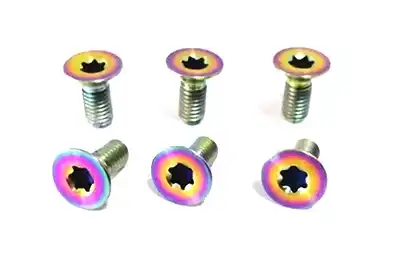
When looking at titanium steering wheel bolts for uses where safety is very important, there are a few technical factors that should be taken into account. Our M5×12mm and M5×15mm choices with a DIN 7991 countersunk head profile and a Torx drive (T25) are a standard that works best for steering wheel uses. The countersunk design makes the bolt head sit flush with the fastening surface, so it doesn't get in the way of the driver's hands while they're working. When compared to hex or Phillips designs, the Torx drive pattern transfers power more efficiently. This lowers the risk of cam-out during installation and the chance of broken heads during maintenance.
Another important safety factor is the thread contact depth. The 12mm and 15mm length choices work with different hub thicknesses while making sure the threads engage properly, which is usually at least 1.5 times the bolt width for even load distribution. When we make things, we roll the threads instead of cutting them. This work-hardens the material and makes a grain flow pattern that follows the shape of the thread, which makes them much more resistant to wear than cut threads.
Installation and Application Tips for Safe Use
Step-by-Step Installation Guide
For the safety benefits of titanium steering wheel bolts to work, they must be installed correctly. The first step is to check the parts, including both the new fasteners and the areas they'll attach to. Make sure the bolt threads are clean and not broken. They shouldn't have any burrs or other things that could stop the threads from engaging. Check the bearing holes for the hub and steering wheel to make sure they are free of corrosion, old thread damage, and misalignment that could lead to uneven loads.
The next step is to verify thread activity. The holes in the steering wheel should be deep enough to fully connect the threads, ideally at least 1.5 times the bolt's width. When you only connect some of the threads, the load is put on a smaller number of them, which greatly increases the stress and failure risk. It's better to use depth tools to check the hub thread depth before trying to install something than to find that the contact isn't good after torquing.
Start all the screws by hand before you put pressure on any one of them. This method finds possible alignment or cross-threading problems early on, when they are still easy to fix. Cross-threading with too much force can damage both the bolt and hub threads, which can cost a lot to fix and make the joint less stable. Titanium has low friction, which means that threads that are properly lined should turn easily with little resistance when they are first engaged.
For installations with more than one bolt, torque is applied in a star or cross pattern, slowly tightening each fastener until they meet the end standard instead of fully tightening one before going on to the next. This method makes sure that the load is spread evenly across the fastening interface and keeps the steering wheel hub or center part from warping. If you use a measured torque wrench with the right socket or Torx bit (T25 for our basic product), you won't have to worry about over-tightening, which could damage the threads or the drive recess.
Compatibility with OEM and Aftermarket Components
Different types of vehicles and component pairs use steering wheel bolts in different ways. When OEMs place parts in production cars, they usually use standard bolt specifications that are based on an engineering study of how much clamping force is needed and how much room is available for packaging. When replacing steel bolts with titanium fasteners, make sure that the thread size, length, and head style are the same as the originals to make sure the bolts fit properly and the load is transferred properly.
There is more variety with aftermarket steering wheels and quick-release methods. Different brands, such as MOMO, Sparco, Nardi, and Personal, have different mounting styles and hub designs that might need different bolt lengths or numbers. Before buying fasteners, it's helpful to look at the fitting directions from both the steering wheel and hub makers. If the installation instructions aren't clear or if you're working with special or old applications, our expert team can help you check the specifications.
Pay attention to how you use your washer as well. In some setups, washers are used under the bolt heads to spread the clamping loads over a bigger area or make up for differences in the countersink depth. Hardened steel washers can be used in most situations, but titanium washers are better because the material qualities stay the same along the load path. Aluminum or brass washers are examples of soft materials that shouldn't be used because they can bend under gripping loads and lose preload over time.
Common Mistakes and How to Avoid Them
Installation errors account for most titanium fastener problems in car settings are caused by mistakes in the installation process. Most people make the mistake of using too much force, which can happen when they use impact tools or just tighten too much with a hand wrench. Impact wrenches apply rapid, high-magnitude loads that can be stronger than titanium's yield strength before the user knows they have reached the right torque level. The vibrational energy from collisions can also change the thread friction coefficients in unpredictable ways, which makes it hard to control the real preload.
Another common problem is using the wrong drive tools. If the Torx bit is old or the wrong size, it can round out the drive groove, making it hard or impossible to remove later and possibly requiring a new bolt. To ensure full engagement across all six drive lobes, high-quality T25 Torx bits are made to precise standards. This spreads power evenly and stops cam-out, which damages the recess.
Not following the instructions for lubricating threads leads to inconsistent results. Some makers say to put it dry, while others say to use a light anti-seize. When torque values are based on dry conditions, using a lube causes too much loading, which could cause threads to break. On the other hand, dry installation when published values assume greasing causes the parts to be undertightened and possibly come free. Always make sure that written torque requirements refer to threads that are oiled or dry.
Galvanic rust problems can happen when you use different types of fasteners in the same installation. However, titanium's strength makes this less of a problem. With titanium bolts on aluminum wheels, there is no chance of corrosion because titanium is more noble (cathodic) than aluminum in the galvanic series. In the same way, steel wheels with titanium bolts keep rust from speeding up. When you use low-strength bolts with high-strength hubs, you can make a weak link in the system. This is the main compatibility issue.
Conclusion
In conclusion, titanium steering wheel bolts are a mature technology that has been proven safe for use in cars as long as they are made to the right standards and are put properly. The material is great for both high-performance racing and OEM production because it has a great strength-to-weight ratio, is highly resistant to rust, and doesn't wear down easily. Titanium screws are usually unsafe because they are installed incorrectly, don't go through enough quality control during production, or use lower grade alloys, not because of the material itself. Business-to-business buyers can be sure that the titanium steering wheel bolts they choose will work if they work with ISO 9001-certified makers who strictly control the quality of their materials and measurements. Lifecycle cost benefits, such as less upkeep, longer service intervals, and better performance, often make up for the higher starting price compared to traditional steel fasteners. Titanium fasteners will become more important in passenger cars, motorsports, and specialty modification markets where safety and performance must not be hampered as the auto industry continues to focus on reducing weight and improving efficiency.
Premium Titanium Steering Wheel Bolt Solutions from Wisdom Titanium
Picking the right production partner is the first step to adding reliable, high-performance titanium steering wheel bolts to your car line or race program. Wisdom Titanium offers aerospace-grade fasteners that are ISO 9001-certified and designed especially for steering uses that need to be safe. Our M5×12/15mm DIN 7991 countersunk bolts come with a T25 Torx drive and an optional PVD rainbow finish. They are made with precise CNC machining and material from Baoji Titanium Valley, which is China's main titanium production hub, accounting for 60% of the country's output and known around the world for its high-quality metals.
We offer reasonable factory prices and only require a minimum order number of 100 pieces. This makes buying in bulk a good option for OEM production lines, repair shops, racing teams, and wholesalers who serve a wide range of markets. Long wait times that mess up project plans can't happen with our ready-to-ship inventory, and our custom CNC capabilities can handle non-standard specs when your application needs unique solutions. Our experienced engineering team can help you choose the right fasteners, get the right torque specs, and install them correctly, whether you're looking for supplies for a single race season or for the production of many cars over a long period of time.
Please email our team at sales@wisdomtitanium.com to talk about your needs with a specialized titanium steering wheel bolt supplier who knows how to balance performance, safety, and cost-effectiveness. Ask for full product specs, certifications for the materials used, and volume price models that are made to fit your buying needs. You can look at our full selection of titanium fasteners and custom CNC parts at wisdomtitanium.com. We serve customers in the aerospace, automobile, motorbike, bicycle, and industrial equipment industries around the world.
FAQ
Are titanium steering wheel bolts compatible with all vehicle types?
Do titanium steering wheel bolts work with all kinds of cars? Titanium fasteners can be used in most vehicle situations as long as they meet the standards of the original equipment. The hub and steering wheel must have the same thread size, length, and head style. Titanium bolts tend to be more expensive, but they are worth it for high-end cars, race vehicles, and other situations where weight saves and resistance to corrosion are important. Fasteners made of titanium can be useful for standard passenger cars, but they are usually made of traditional materials because they are cheaper, unless the climate or performance needs make titanium better.
How often should titanium steering wheel bolts be inspected or replaced?
For most situations, a visual check at regular maintenance times is enough. Check for broken threads, a deformed head, or signs that the screw is coming loose. Titanium bolts that are properly fitted and are used normally rarely need to be replaced unless they are taken off for component repair. Due to the high loads, racing apps should be checked more often—possibly after every race event. No matter how long it has been used, any bolt that has damage that can be seen should be replaced. Even if the bolts on a crash-damaged car look like they aren't broken, they should be changed because hidden material stress could make the car less reliable in the future.
Can titanium steering wheel bolts be safely reused after removal?
Most of the time, Grade 5 titanium bolts can be used again as long as the threads are still in good shape and the bolt doesn't show any signs of breaking or deforming. Titanium fasteners can be used more than once as long as the right torque methods are followed. This is in contrast to some steel fasteners that are only meant to be installed once. Before putting the part back together, clean the threads well and check the drive grooves for damage or rounding. If there is any question about the state of a bolt after it has been removed, replacing it is much cheaper than fixing the problems that come up when a part fails. Keep enough extra parts on hand so that you don't have to use iffy fasteners more than once.
References
1. Boyer, R., Welsch, G., & Collings, E.W. (1994). Materials Properties Handbook: Titanium Alloys. ASM International.
2. Budinski, K.G. (1996). "Corrosion and Corrosion Protection for Titanium Alloys." Engineering Materials Handbook, ASM International.
3. Donachie, M.J. (2000). Titanium: A Technical Guide, 2nd Edition. ASM International.
4. International Organization for Standardization. (2017). ISO 10642:2017 - Hexagon socket countersunk head screws. Geneva: ISO.
5. Society of Automotive Engineers. (2018). SAE J1199 - Mechanical and Material Requirements for Metric Externally Threaded Steel Fasteners. Warrendale, PA: SAE International.
6. Threadgill, P.L. & Nunn, M.E. (2003). "A Review of the Fatigue Performance of Titanium Alloys." TWI Ltd. Research Report, Cambridge, UK.




