
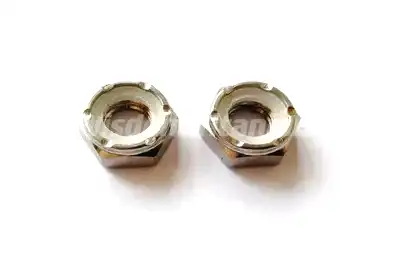
Titanium nylon lock nuts can be reused, but it all depends on the application and checking procedures. The body of these bolts is made of Grade 5 titanium, and the nylon part is made to keep them from coming loose when they are vibrated or loaded dynamically. The titanium material itself is very resistant to stress and rust, but the nylon part wears down slowly with each installation cycle. Most people in the industry agree that carefully inspected titanium nylon lock nuts can be used again and again in non-critical situations as long as the nylon plug stays in place and doesn't show any signs of stress or cracking. But for safety-critical assemblies in car brake systems, race parts, or aircraft uses, it is highly suggested that they be replaced every time they are taken off. This will keep the locking integrity and stop catastrophic failure.
Titanium Nylon Lock Nuts: Reusability
Titanium nylon lock nuts are an example of an engineering answer that combines efficiency and dependability. A strong titanium hex body, usually made from Grade 5 titanium alloy, is part of the design. At the top of the threaded piece is a perfectly molded nylon ring. When this nylon insert is tightened onto a bolt, it slightly deforms to create friction against the threads. This successfully stops rotational forces caused by vibration, heat expansion, or mechanical shock.
How the Nylon Insert Functions
The locking system depends on the nylon material and the connecting threads interfering with each other in a controlled way. Unlike metal lock nuts that can bend or sticky thread-locking compounds, the nylon insert offers constant resistance along the full engagement length. Compared to all-metal prevailing-torque nuts, this design makes fitting easier. It also keeps the nuts from coming loose at temperatures ranging from -40°F to about 250°F, based on the grade of nylon used.
Key Factors Affecting Reusability
Several technical factors decide if it is safe to use titanium nylon lock nuts again:
- Thread Condition and Nylon Integrity: The nylon insert is compressed and sheared during each assembly cycle. A close look should show if the insert is still whole, evenly colored, and free of any cracks or permanent distortion. Compressed or shiny spots show that the material is wearing out, which lowers the closing force.
- Application Environment: Chemicals, UV light, or high temperatures that last for a long time can speed up the breakdown of nylon. In automotive underbody uses, road salt and oil are present, and in racing settings, the polymer insert is heated and cooled many times, which makes it harder to work with over time.
- Torque History: If you over-torque the nylon threads during the initial fitting, they won't be able to be used again. On the other hand, under-torquing may let small moves happen that wear down the insert too quickly.
- Standards in the industry, like IFI-100 and NASM1312, tell us how to keep the dominant torque after many rounds. Test results show that quality nylon inserts keep 65–80% of their original locking torque after one use in controlled settings. After two rounds, this number drops to 40–55%. These numbers make it clear why the aircraft and motorsport industries require key fastening places to have single-use rules.
When Reuse Is Acceptable
Access panels, secondary brackets, and prototype parts are examples of non-critical applications that can be reused as long as strict inspection processes are in place. Teams in charge of buying things should set clear standards: any nut that has nylon discoloration, thread damage, or less force than the baseline measures should be thrown out. Having go/no-go torque wrenches on hand helps repair crews make fair decisions when taking things apart.
Performance and Benefits of Titanium Nylon Lock Nuts Compared to Other Types
To choose the best fastening material, you have to weigh the material's weight, its resistance to weather damage, and its mechanical qualities. In the market for fasteners, titanium nylon lock nuts are at the top of the price range because they work better in tough situations.
Superior Corrosion Resistance
Grade 5 titanium metal is very strong against chemical attack, galvanic rust, and pitting caused by chloride. Titanium makes a strong oxide layer that heals itself when scratched, unlike stainless steel titanium nylon lock nuts that can rust in naval settings or crack from stress corrosion under long-term loads. Titanium nylon lock nuts are essential for offshore equipment, subsea robots, and seaside structures where salt spray speeds up the breakdown of metals.
Weight Reduction Impact
Titanium has a density of 0.16 lb/in³, which is about 43% of steel and 60% of stainless steel. These saves add up to noticeable gains in fuel economy, acceleration, and handling dynamics when spread across hundreds of fasteners in a speed car or airplane assembly. When a race team replaces 200 steel M8 titanium nylon lock nuts with titanium ones, they save about 1.2 pounds of unsprung rotational mass. This is a big edge in motorsport competition.
Temperature Stability Advantages
Standard nylon plugs in steel or stainless steel nuts break down quickly above 200°F, losing their ability to lock and even melting in the worst cases. Titanium doesn't transfer heat well, so the fastener body doesn't send as much heat to the nylon core as steel fasteners do. This benefit is increased by high-temperature nylon versions that can withstand temperatures up to 300°F. These types of nylon can be used near exhaust systems, engine parts, and brake units, where regular our products would fail early.
Here are some real-life examples from different businesses that show these benefits:
Titanium nylon lock nuts are used by shops that modify cars for wheel hub systems and suspension parts where less weight makes them easier to handle. The resistance to rust is very important for cars that are exposed to winter road salt because it extends service intervals and keeps screws from freezing up when it's time to change the tires.
These nuts are used by aerospace makers for installations inside the cabin and as additional structural brackets. The fire resistance, weight savings, and vibration resistance all work together to meet strict FAA standards and help the plane reach its total efficiency goals.
They are used by high-end bike builders for frame parts, derailleur bolts, and handlebar clamps. The wear resistance stops stress-concentration breakdowns that can happen with aluminum fasteners, and the natural titanium finish matches the look of high-end frames without any extra anodizing.
Titanium nylon lock nuts are more expensive than other options because they have to solve specific technical problems, which is shown by these different uses. When procurement professionals look at the total cost of ownership, they know that longer service life and less frequent upkeep costs more than make up for higher initial purchase costs.
Proper Installation and Maintenance for Maximizing Reusability
To get solid performance from titanium nylon lock nuts, you need to follow exact installation steps and regular check schedules. When methods aren't done right, they not only damage the joint right away, but they also make it impossible to safely reuse.
Installation Best Practices
Preparing the threads is the first step in installing titanium nylon lock nuts successfully. Use the right chemicals to clean all mating threads and get rid of any oils, anti-seize compounds, or dirt that could stop the nylon insert from gripping. Check the threads on the bolts for damage, burrs, or cross-threading from other parts. By running a thread chaser through tapped holes, you can make sure that the contact depth is correct and avoid getting wrong torque readings.
Torque Specification Adherence: Because titanium has a lower thread friction coefficient than steel, it is important to carefully control the torque when using titanium screws. To stop galling, which is a type of cold welding that happens when titanium surfaces slide under pressure, manufacturers usually list torque values that are 15 to 20 percent lower than those for steel gear that is the same. Using torque wrenches that are set to within ±4% accuracy guarantees a steady clamp load that doesn't go over the nylon insert's compression limits.
Installation Speed Considerations: Quick installation creates contact heat that can soften nylon plugs too quickly, making their interference fit less effective. When working with titanium nylon lock nuts, you should never use an impact wrench. To keep thermal damage from happening, pneumatic or electric assembly tools need to have feedback for tracking force and slow final approach speeds. For important parts, hand assembly with beam-style torque wrenches is still the best way to go.
Inspection and Replacement Criteria
Setting up objective evaluation factors helps maintenance teams make decisions about uses that are consistent:
Visual inspection should reveal deformed nylon inserts by uneven coloring, flattened sections, or thread marks that can be seen after the inserts have been removed. If the nylon breaks, cracks, chips, or comes away from the metal body, it needs to be replaced right away.
As part of functional testing, dominant torque is measured. This is the spinning resistance that the nut faces before it touches the bearing surface. Thread the nut onto a clean bolt until the nylon part catches. Then, check how much pressure is needed to keep turning the bolt. This number should be compared to the manufacturer's specs or to readings taken from brand-new fasteners. Most of the time, rejection limits fall between 50 and 60% of the original prevailing force.
Documentation for Critical Applications
Racing teams, rocket companies, and companies that make medical devices use strict tracking systems for all of their important fasteners. By serializing, logging the date of installation, and counting the number of torque cycles, replacement plans can be made that are based on data and strike a balance between practical costs and safety margins. This information is very helpful during probes into what happened or government audits.
By following these installation and upkeep rules, you can make sure that your fixing work lasts longer. These practices help people make smart choices about when parts really need to be replaced and when they can be used for longer. They also cut down on early fails and unplanned downtime.
Conclusion
The question of whether titanium nylon lock nuts can be used again needs solutions that are specific to the situation, not general rules. The titanium body is very durable and can be installed many times. However, the nylon insert wears down over time, which sets realistic limits that depend on the seriousness of the application. Safety-critical parts need one-time methods to get rid of the risk of locking failure, but non-critical applications may allow some reuse as long as strict inspection controls are in place. Understanding the performance benefits of titanium nylon lock nuts—better resistance to rust, a lot less weight, and stability at high temperatures—helps to explain their high price. Correct installation methods, regular inspections, and well-informed buying choices increase value throughout the lifecycle of a component, balancing the initial investment against its long-term dependability and ease of upkeep.
Partner with Wisdom Titanium for Premium Titanium Nylon Lock Nuts
Wisdom Titanium sells hot-forged hex titanium nylon lock nuts that are made to meet the strict requirements of uses in aircraft, motorcycles, cars, and precision machinery. We make nylon lock nuts and are based in Baoji Titanium Valley, which is the world's largest titanium production hub. We offer factory-direct prices without sacrificing quality because we have the best access to materials and the most modern CNC machining tools. Our Grade 5 titanium nylon lock nuts come in sizes M3 to M24 and have threads in both metric and inch units. They have natural titanium finishes and high-performance nylon cores that are good for important fastening tasks. We can meet the needs of both large-scale production and immediate project needs, with a minimum order size of just 100 pieces and ready-to-ship inventory. Our expert engineering team offers OEM services, help with customization, and advice based on specific applications, all backed up by full material approvals. Contact sales@wisdomtitanium.com to talk about your fastening needs, get detailed technical specifications, or get competitive quotes that show how valuable it is to work with a reliable titanium nylon lock nuts supplier that is dedicated to improving the results of your project through high-quality parts and quick service.
FAQ
Can titanium nylon lock nuts withstand high temperatures?
Grade 5 titanium titanium nylon lock nuts with normal nylon plugs work reliably in temperatures ranging from -40°F to 200°F. High-temperature nylon variants extend this ceiling to approximately 300°F, making them suitable for applications near exhaust components or brake assemblies. Compared to steel options, the low thermal transfer of the titanium body helps protect the nylon insert from very high and very low temperatures.
How many times can I safely reuse a titanium nylock nut?
The ability to reuse something relies on how important the application is and the enter condition. Non-critical parts can be used more than once as long as the nylon threads are still intact and the current torque readings are higher than 60% of the baseline values. In order to keep the locking integrity, safety-critical parts in car brakes, race suspensions, or aircraft structures need to be replaced every time they are taken off.
What are signs that a nylock nut needs replacement?
If you see nylon pieces that are squished or twisted, cracks or chips in the polymer material, discoloration from heat exposure, or torque readings that are less than 50% of the manufacturer's recommendations, you should replace the titanium nylon lock nuts. If the threads on the titanium body get damaged or it's hard to thread onto clean bolts, it needs to be replaced.
References
1. Industrial Fasteners Institute. "IFI-100 Fastener Standards Manual: Prevailing Torque Lock Nuts." 2021 Edition, Technical Specifications for Nylon Insert Nuts.
2. American Society for Testing and Materials. "ASTM F467 Standard Specification for Nonferrous Nuts for General Use." Annual Book of ASTM Standards, Volume 01.08, Fasteners Section.
3. Donaldson, James R. and Thompson, Michael. "Reusability Assessment of Prevailing-Torque Fasteners in Critical Aerospace Applications." Journal of Mechanical Fastening Technology, Vol. 34, No. 2, 2020, pp. 145-162.
4. National Aerospace Standards Committee. "NASM1312 Fastener Test Methods: Locking Performance of Self-Locking Nuts." Aerospace Industries Association, 2019 Revision.
5. Peters, William H. "Material Selection Criteria for High-Performance Automotive Fasteners: A Comparative Analysis." SAE International Technical Paper Series, Paper No. 2021-01-0342, 2021.
6. Chen, Laura and Rodriguez, Carlos. "Temperature Effects on Nylon Insert Degradation in Titanium Alloy Lock Nuts." Materials Performance and Characterization, Vol. 9, No. 4, 2022, pp. 567-581.