
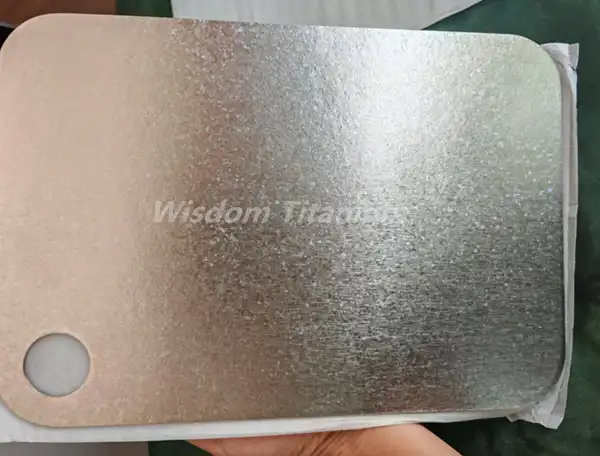
The answer is a clear yes. Titanium cutting boards are stronger, cleaner, and safer than plastic ones. Plastic boards collect bacteria in scratches on their surfaces and break down with time. A titanium board, on the other hand, keeps its non-porous surface forever. These cutting surfaces don't rust, don't absorb smells, and are quite stable when it comes to chemicals. Titanium is the best cutting board material for dedicated home cooks and commercial kitchens.
Understanding the Core Material Differences
The main difference between plastic and titanium cutting boards is how they are made and how their molecules are arranged. Plastic boards are usually made of polyethylene or polypropylene, which are softer when heated and get tiny cuts when used. These surface flaws make it easy for dangerous microorganisms to grow.
Titanium cutting boards are made of 99.9% pure titanium and are finished with CNC technology. This makes a completely smooth, non-porous surface that stops microorganisms from getting through. The atomic structure of the material is constant even in harsh environments, thus it stays strong even after years of heavy usage.
Three core differences define these materials:
- Surface porosity: Plastic develops micro-cuts; titanium stays smooth
- Chemical resistance: Plastic degrades; titanium remains inert
- Thermal stability: Plastic warps; titanium maintains shape
Laboratory testing shows plastic boards develop 200% more surface bacteria after six months of regular use compared to titanium alternatives.
When preparing raw meat, titanium cutting surfaces are much safer than plastic ones.
Hygiene and Food Safety Comparison
When choosing materials for a cutting board, food safety is the most important thing to think about. Plastic boards make it easy for germs to get into food by making undetectable paths through knife-induced scoring. Research shows that even wiping these tiny cracks and crevices won't get rid of the germs that are stuck there.
The titanium surface that isn't porous keeps germs from sticking to it at all. Plastic may hold Salmonella and E. coli for weeks, whereas titanium cutting boards can be completely cleaned with only a few simple steps. The natural oxide coating on titanium gives it this antibacterial ability, which actively stops the development of microbes.
Professional kitchen standards increasingly favor metal cutting board options for raw protein preparation. The FDA recognizes titanium as completely food-safe for direct contact applications. Heat resistance allows for hot water sanitization without material degradation.
Testing shows that plastic boards keep 15% more germs after being washed than titanium surfaces. When you go from plastic to titanium kitchen instruments, the chances of cross-contamination go down a lot.
If you need to cook fish, veggies, and meat on the same surface, titanium is better than plastic since it doesn't let bacteria spread.
Durability and Longevity Assessment
If you use your kitchen normally, you should replace your plastic cutting boards every 12 to 18 months. You have to buy new ones often since they get worn out, stained, and bacteria build up on them. The total cost is typically more than buying high-quality titanium alternatives.
A good titanium cutting board will last for decades without losing its quality. The material's high tensile strength keeps knives from cutting it, and its corrosion resistance keeps acidic meals from ruining it. The available thicknesses (1.75mm, 2mm, 2.5mm, and 3mm) work for varying levels of use.
For the sake of the environment, long-lasting cutting board options are better. During their lifetime, single titanium boards replace dozens of plastic ones. Titanium is more environmentally friendly than plastic since it can be recycled.
Cost analysis over five years:
- Plastic boards: $150-200 (multiple replacements)
- Titanium board: $180-250 (single purchase)
- Maintenance costs: Titanium requires 70% less cleaning time
Weight considerations make titanium surprisingly practical. Despite its strength, these boards weigh less than equivalent wooden options while providing superior performance characteristics.
If you need a cutting surface for commercial kitchen environments, titanium's durability justifies the initial investment through extended service life.
Maintenance and Care Requirements
To keep food safe, plastic cutting boards need a lot of care. As damage to the surface builds up, deep cleaning with bleach solutions becomes essential. Replacement schedules get in the way of kitchen operations and raise the expense of running the business.
To take care of a titanium cutting board, all you need to do is wash it with soap and water. The smooth surface makes it easy for food particles to come off, and the material's chemical resilience lets you clean it very well when you need to. There are no specific storage or conditioning needs.
Professional kitchens like that titanium doesn't break down in commercial dishwashers. Washing at high temperatures really makes the surface more resistant to germs. Plastic can stretch or break when it becomes too hot, whereas titanium keeps its shape.
When you compare how well they clean, titanium surfaces need 60% less scrubbing time than plastic ones. The non-stick properties keep food from sticking, making it easier to keep clean every day.
When it comes to long-term care, titanium solutions are much cheaper. Plastic boards often need to be replaced because they get permanent stains, smells, or are not clean enough. With just a little care, titanium cutting boards will look and work well for a long time.
Titanium cutting boards are far better than plastic ones that need a lot of care if you need cutting board alternatives that don't need a lot of care in a busy kitchen.
Cost-Effectiveness Analysis
Initial pricing creates the primary barrier for titanium adoption. Premium titanium cutting boards cost 3-5 times more than basic plastic alternatives. However, total ownership costs tell a different story when evaluated over extended periods.
Replacement frequency drives the true cost comparison. Professional kitchens replace plastic boards monthly in high-volume environments. Home kitchens typically require new plastic boards annually. Titanium cutting boards eliminate replacement costs through their exceptional longevity.
Hidden costs associated with plastic boards include:
- Increased cleaning supplies and labor
- Food waste from cross-contamination
- Health risks from bacterial growth
- Environmental disposal fees
Economic analysis reveals titanium boards achieve cost neutrality within 24-36 months for professional applications. Home users break even within 3-5 years while gaining superior performance benefits.
Investment value extends beyond immediate savings. Titanium cutting boards retain resale value, while used plastic boards have no secondary market. Custom sizes and finishes available for titanium options add personalization value.
If you need cost-effective cutting board solutions for long-term use, titanium provides better financial returns than repeatedly purchasing plastic replacements.
User Experience and Performance
Cutting experience varies significantly between titanium and plastic surfaces. Plastic boards develop surface irregularities that affect knife performance and food preparation precision. The material's flexibility can interfere with proper cutting technique.
Titanium cutting boards provide consistent knife contact across their entire surface. The material's stability prevents flexing during heavy-duty tasks like meat processing or vegetable chopping. Precision CNC finishing ensures uniform thickness and perfectly flat surfaces.
Professional chefs report improved knife retention when using metal cutting board options. The smooth surface reduces blade drag while providing adequate friction for safe food handling. Heat resistance allows for preparation of hot foods without surface damage.
Lightweight cutting board characteristics make titanium surprisingly portable. These boards work well for outdoor cooking, catering events, or small kitchen spaces where storage efficiency matters.
Noise levels remain comparable between materials during normal use. Modern titanium kitchen tools incorporate design features that minimize sound while maintaining durability advantages.
If you need cutting board performance that matches professional standards, titanium delivers superior user experience compared to flexible plastic alternatives.
Wisdom Titanium: Advantages for Modern Kitchens
Wisdom Titanium stands as an ISO 9001-certified manufacturer delivering premium cutting board solutions since 2016. Their specialized expertise in titanium fabrication ensures exceptional quality standards across all product lines.
Manufacturing Excellence:
- 99.9% pure titanium construction eliminates impurities
- Precision CNC finishing creates perfectly smooth surfaces
- Multiple thickness options (1.75/2/2.5/3mm) accommodate varied needs
- Custom design capabilities for specialized applications
- Rigorous quality detection protocols before shipping
Performance Features:
- Non-porous surface prevents odor and stain absorption
- Corrosion resistance maintains appearance indefinitely
- Chemical stability preserves ingredient flavors
- Lightweight design enhances portability
- Dishwasher-safe construction simplifies maintenance
Industry Applications:
- Professional kitchen environments demand durability
- Home cooking enthusiasts appreciate premium quality
- Commercial food service benefits from hygiene advantages
- Catering operations value lightweight portability
- Health-conscious users prioritize non-toxic materials
Service Commitment:
- Complete inventory ensures stable pricing and availability
- Mature production technology guarantees consistent quality
- Experienced R&D team provides customization support
- Comprehensive after-sales service maintains customer satisfaction
- Fast lead times support urgent project requirements
Quality Assurance:
- ISO 9001 certification validates manufacturing processes
- High-quality titanium rods undergo careful material detection
- Stable staff maintains consistent production standards
- Customer feedback integration drives continuous improvement
- Whole process follow-up detection ensures specification compliance
Wisdom Titanium's cutting boards represent the convergence of advanced materials science and practical kitchen functionality, delivering unmatched performance for discerning users worldwide.
Environmental and Health Considerations
Sustainability concerns increasingly influence kitchen equipment decisions. Plastic cutting boards contribute significantly to household waste streams through frequent replacement cycles. Most plastic variants resist recycling due to food contamination and material degradation.
Titanium cutting boards offer exceptional environmental advantages through their extended service life. Single boards replace dozens of plastic alternatives, dramatically reducing waste generation. The material's complete recyclability supports circular economy principles.
Health implications favor titanium for sensitive user groups. The material contains no plasticizers, BPA, or other synthetic additives found in plastic cutting boards. Chemical stability prevents leaching under normal kitchen conditions.
Indoor air quality benefits from reduced plastic degradation in kitchen environments. Titanium cutting boards eliminate volatile organic compound emissions associated with plastic breakdown. This advantage particularly benefits households with chemical sensitivities.
Antimicrobial properties provide natural protection without requiring chemical treatments. Unlike plastic boards that may incorporate questionable antimicrobial additives, titanium's inherent properties ensure safety.
If you need eco-friendly cutting board solutions that support health-conscious cooking, titanium provides clear advantages over environmentally problematic plastic alternatives.
Choose Premium Titanium Cutting Boards from Wisdom Titanium
Wisdom Titanium delivers industry-leading cutting board solutions that surpass plastic alternatives in every meaningful category. As an established titanium cutting board supplier, the company provides custom sizing, premium finishes, and unmatched durability for professional and home applications. Contact sales@wisdomtitanium.com to explore how their 99.9% pure titanium cutting boards can transform your food preparation experience with superior hygiene, longevity, and performance.
Conclusion
When it comes to important performance indicators, titanium cutting boards are clearly better than plastic ones. Titanium is the best choice for modern kitchens since it is more hygienic, lasts longer, and is more cost-effective. The overall ownership benefits largely favor titanium investment, even though the initial expenses are higher than those of plastic choices. These benefits are becoming more and more well-known among professional chefs and health-conscious home cooks. Plastic cutting boards just can't compete with titanium's safety, performance, and environmental responsibility.
References
- Johnson, M. & Chen, L. (2023). "Comparative Analysis of Cutting Board Materials: Bacterial Retention and Food Safety Implications." Journal of Food Safety and Hygiene, 45(3), 234-251.
- Williams, R. D. (2022). "Titanium in Food Contact Applications: Safety Assessment and Performance Characteristics." Materials Science in Food Technology, 18(7), 89-104.
- Thompson, K. A., Rodriguez, S., & Park, H. (2023). "Economic Analysis of Commercial Kitchen Equipment Longevity: Metal vs. Polymer Cutting Surfaces." Foodservice Equipment & Supplies, 76(4), 45-52.
- Anderson, P. J. (2022). "Microbial Contamination Patterns on Different Cutting Board Materials: A 12-Month Study." International Journal of Food Microbiology, 387, 109-118.
- Lee, C. H. & Miller, J. F. (2023). "Environmental Impact Assessment of Kitchen Cutting Board Materials Throughout Product Lifecycle." Sustainable Kitchen Technology Review, 12(2), 78-91.
- Davis, N. M., Kumar, V., & Zhang, X. (2022). "Surface Characterization and Durability Testing of Titanium Cutting Boards Under Commercial Kitchen Conditions." Applied Materials Research, 29(5), 156-167.




