
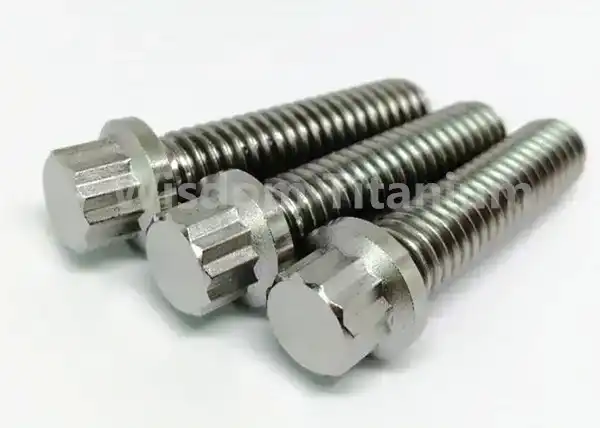
Yes, titanium beadlock bolts are worth it when weight, corrosion resistance, and a premium look matter more than the lowest unit price. Grade 5 titanium (Ti-6Al-4V) weighs about 44 percent less than steel for the same volume, and it resists rust in mud, water, and road salt. They make the most sense for race teams, off-road builds, and aftermarket brands that sell on performance. Steel still wins on cost and on raw tensile strength, so heavy-duty or budget builds may not need titanium. I will walk through the facts below so you can decide for your own wheels or product line.
What Titanium Beadlock Bolts Are and How They Work?
The Job of a Beadlock Bolt
Two rings on the outside of a beadlock wheel press the tire bead against the lip of the wheel. Through that ring, titanium beadlock bolts are inserted. They hold the clamp load that keeps the tire from slipping when the air pressure is low. The bolts work with the ring, screws, and wheel, so I rate the whole thing, not just one part. How the wheel is made determines how many bolts it has. Ten of the Tikore titanium kits on the market come with twenty bolts for 13- and 15-inch wheels, eighteen bolts for 16-inch wheels, and twenty-four bolts for 17-inch wheels. The right count, thread, and length can be seen in the picture.
Grade 2 vs. Grade 5 Titanium
ASTM B348 says that Grade 2 commercially pure titanium must have a tensile strength of at least 345 MPa. Grade 5 titanium, which is made of Ti-6Al-4V, must have a tensile strength of at least 895 MPa. Grade 2 doesn't rust quickly, but it's too soft to clamp most wheels. Grade 5 titanium is used to make our beadlock bolts. This is the best type for performance hardware. There is a good chance that some of the titanium on this market is fake or has the wrong title. Ask the seller to write down the lot's grade and test scores.
Sizes and Head Styles We Supply
At Wisdom Titanium, we make Grade 5 titanium bolts in two sizes. They are 1/4-20 and 5/16-18. There are four kinds of heads to pick from. A hex flange can be used with most sockets. It spreads the load under the head. A 12-point socket lets you use a wrench at more angles when you're in a tight spot. And a Torx drive doesn't cam-out when the power is high, so it has a low profile. An inner 12-point drive also has an internal socket. This means that we only need 200 pieces of each item for a trial order to cover a wide range of styles and sizes.
Titanium Beadlock Bolt Benefits and How They Compare
Weight and Corrosion Resistance
Ti-6Al-4V is about 4.43 g/cm³ dense, while steel is about 7.85 g/cm³ dense. That means a bolt the same size made of titanium is 44% lighter than one made of steel. A 10-gram steel bolt weighs only 5.6 grams less, and a 24-bolt wheel kit weighs only 100 grams less. It's just a bit heavier than that per wheel, but the difference is noticeable at the rim, and it gives your brand a clear feature to promote. Titanium also forms a solid oxide film that is not damaged by water, mud, or road salt.
Titanium vs. Steel
It's easy to get steel and it doesn't cost much. When pulled apart, SAE J429 Grade 8 bolts must be able to handle at least 150 ksi, which is about 1,034 MPa. This is stronger than the 895 MPa minimum tensile strength for Grade 5 titanium. Walker Evans needs Grade 8 bolts that come in packs of 25 with nuts to make 17-inch beadlock wheels. There is no other metal that is stronger than titanium beadlock bolts. When it comes to Grade 5 titanium, the lowest tensile strength I could find was 202 MPa per g/cm³. When it comes to Grade 8 steel, it was 132 MPa per g/cm³. Remember that "Grade 5" and "Grade 8" are not the same, so don't use numbers to compare them.
Titanium vs. Aluminum
It weighs about 2.7 g/cm³ less than both of them, and it's simple to paint. 7075-T6, on the other hand, is not as strong as Grade 5 titanium. Its strength only goes up to about 570 MPa. The metal threads wear out faster when you repair wheels a lot. It's important that the threads last a long time on race and road wheels because they break a lot. I wouldn't put aluminum on a beadlock wheel unless the wheel maker says it's okay. This metal works best for show builds or light-duty builds. Titanium is in the middle. It's not as heavy as steel, but it's stronger and lasts longer than aluminum threads.
Strength, Fitment, and Installation
Are They Strong Enough for Off-Road and Racing?
As long as the wheel manufacturer agrees, titanium beadlock bolts can be used on UTVs, ATVs, Jeeps, trucks, rock crawlers, and racing wheels. You can hit things and load these wheels from the side, and they will bend if you drive hard. Tensile strength has only one number. How well the threads engage, how strong they are, how long they last, and how the rings are made can also change how well a beadlock works. Bickford's book on fixed joints says that the most important thing that decides how the joint works is the preload. About 114 GPa of titanium is less stiff than 200 GPa of steel. This makes it stretch in different ways. Before you start, put a practice set on your wheel.
Thread, Length, and Fitment Checks
If the thread or length is wrong, an assembly could not work. Our 1/4-20 and 5/16-18 sizes are UNC, so make sure the bolts and wheel fit together. After that, you need to measure the stack, which is made up of the bolt, washer, ring, wheel lip, and the thread contact you need. Blind holes stop the lengths from getting longer. A bolt that is too long or too short can make the clamp less strong and touch brake parts. Before you make your order, write down the type of wheel, the number of bolts, the size, the head style, the grade, the torque value, and the number of backups. We'll look over that list and your picture together if you send them to us.
Torque, Anti-Seize, and Inspection
Note: Don't use the same power numbers for steel and titanium. Pay attention to the number that says "wheel maker" for the best result. Grade, thread pitch, lubrication, washer material, and target preload are some of the things that can be changed. Start each bolt by hand, clean the threads, and tighten them in a star-shaped pattern of light passes. Titanium threads can gall, which means they can seize and tear, so use an anti-seize that works with them. The same force will cause more preload if there is grease on the part. Make the changes that are needed. Check bolts for bad threads, galling, ring movement, and slow air loss before and after big events. Don't use a broken bolt again; get a new one.
Cost and Supplier Selection
Cost vs. Performance
It costs more to work with titanium because it is harder to clean, check, and make threads for. It also needs special tools. A kit may also include bolts, boxes, and marks that match. No, unit price is not the best way to figure out what something is worth. When rigs get salty or muddy, they need fewer replacements because they have less rotating mass. This is good for race teams and high-end builders. Most of the time, steel is better for teams and heavy-duty builds. As long as the quality stays the same from batch to batch, titanium beadlock bolts give brands a clear reason to charge more.
What to Ask Any Supplier?
Before you give the go-ahead for production, make sure you have technical drawings, documentation for the materials, inspection records, and a sample. Make sure you know the minimum order size, lead time, packaging, export paperwork, and replacement policy. Make sure you send a drawing or sample early so the supplier can give you a good quote. This is especially important if you want different lengths, head designs, or private labeling. Discover how they check each batch and keep track of all the parts, from the bar stock to the finished bolt. Also, check to see how much space you have during busy times, like show and race seasons, when most people want to buy extra items. This is a good sign that a company will likely be able to handle return orders well if they do.
Why Source from Wisdom Titanium?
Wisdom Titanium makes and sell standard and custom CNC parts. We are in Shaanxi Province's Baoji Titanium Valley. The titanium industry cluster here is one of the biggest and best in China, and it is also one of the most important places in the world to make titanium. Ingots, bars, plates, tubes, forgings, and high-performance alloys made of titanium are all part of the local industry chain. Our bolts and nuts are made from great titanium pieces, and we make sure they are good before we send them out. The R&D team here at our company makes custom parts based on your plans, models, or ideas. We also keep stable-priced standard parts and raw materials on hand.
Is It Worth It for You? A Simple Decision Guide
When Titanium Makes Sense?
Titanium beadlock bolts are a good choice for making things that are light, won't rust, look great, or are part of a unique line of goods. It's useful for high-performance off-road builds, UTVs and ATVs that care about weight, seaside vehicles, and aftermarket brands that market performance. If you run a brand, it also lets you make a line of things like wheel bolts, nuts, and special CNC parts from the same stuff. First, make sure you have the right paperwork, grade, size, power, and anti-seize needs. Next, get a test set and use it on the wheel you want to use.
When Steel Is the Better Call?
Weight isn't always important when steel is used; it can still be helpful when it's cheap, easy to find, strong, or has been used before. This group usually has teams, service jobs with a lot of work, and rigs that are very full. Not getting permission to change the material is dangerous if the wheel maker needs Grade 8 steel bolts, like in the Walker Evans case. Until engineers say it's okay, aluminum shouldn't be used instead of either metal. When these things happen, choosing steel is not a give-and-take; it does the job. That's better than selling someone a bolt they can't use.
Pros and Cons at a Glance
Some of its benefits are that it is lighter than steel, doesn't rust, has a high strength-to-weight ratio, looks high-end, and can be made into any size or style head. It costs more, there is a higher chance of thread galling, fitting is more difficult, and grade, torque, lubrication, and fitment need to be carefully controlled. Steel and titanium don't always work better together. It's best to think about what you need technically, how much it will cost over time, the paperwork, the approval of the wheel maker, and how much less weight and rust it will add to the value. Look at everything in light of your wheel, your customer, and your price.
Conclusion
For builds and brands that want a premium appearance, less spinning weight, and corrosion resistance, titanium beadlock bolts are worth the extra money. Titanium Grade 5 is about 44% lighter than steel and harder than steel Grade 8 per unit weight. Grade 8 steel, on the other hand, costs less and has a higher absolute tensile strength. The threads on aluminum aren't as strong, but they are lighter. When it comes to bolts, they only work if they are tightened up properly, have anti-seize, and are checked often. The person who made the wheel should agree to any changes to the material. Cost should be a part of a full ownership view that also looks at supplier documents and batch uniformity. Titanium is best for high-end and high-performance goods. Steel, on the other hand, is best for heavy-duty and cheap work.
FAQ
What grade bolts are used for beadlock wheels?
A piece from Walker Evans shows that SAE Grade 8 nuts are used in a lot of steel beadlock wheels. Grade 5 (Ti-6Al-4V) titanium works better most of the time, while Grade 2 is softer. Always follow the wheel maker's specification.
What is the advantage of titanium bolts?
They are stronger than Grade 8 steel but weigh 44% less than steel of the same size. They also don't rust when they come in contact with water or road salt. Also, they don't have any magnets.
Can I use steel torque values on titanium bolts?
No, the preload is not the same for every washer. It depends on its grade, thread pitch, lube, and material. Set the anti-seize to the number given by the wheel maker.
What is your MOQ for titanium beadlock bolts?
Our minimum order quantity (MOQ) for each item is 200 pieces. Grade 5 titanium beadlock bolts come in 1/4-20 and 5/16-18 sizes, as well as hex flange, inner 12-point, 12-point flange, and Torx styles.
Ready to Source Titanium Beadlock Bolts from Wisdom Titanium?
Wisdom Titanium is a manufacturer and supplier of titanium beadlock bolts. We supply Grade 5 titanium bolts in 1/4-20 and 5/16-18, in hex flange, 12-point flange, inner 12-point, and Torx styles, with a 200-piece MOQ for each item. Email your drawings or target specs to sales@wisdomtitanium.com, or visit wisdomtitanium.com, and our team will reply with a quote.
References
- ASTM International, Standard Specification for Titanium and Titanium Alloy Bars and Billets (ASTM B348/B348M), 2019
- SAE International, Mechanical and Material Requirements for Externally Threaded Fasteners (SAE J429), 2014
- ASM International, ASM Handbook Volume 2: Properties and Selection: Nonferrous Alloys and Special-Purpose Materials, 1990
- ASM International, Titanium: A Technical Guide, 2nd Edition (Matthew J. Donachie), 2000
- ASM International, Materials Properties Handbook: Titanium Alloys (Boyer, Welsch, and Collings), 1994
- CRC Press, Introduction to the Design and Behavior of Bolted Joints, 4th Edition (John H. Bickford), 2007