
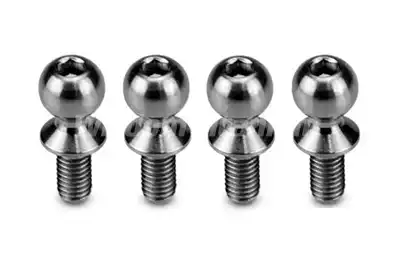
Safety is still the most important thing to think about when looking at binding options for high-performance uses. Titanium ball studs are very reliable in settings like racing, aircraft, and precision engineering. These parts are made from aerospace-grade titanium alloy, usually Grade 5 (Ti-6Al-4V), which has great corrosion protection and a very high strength-to-weight ratio. The anodized coating makes the surface even more durable while keeping the same size even when the temperature changes. Racing titanium ball studs meet strict safety standards and lower unsprung mass in suspension systems. They can be made with different ball sizes and metric threads.
Installation, Maintenance, and Longevity for Safe Use
Follow the right steps for installation and care to make sure titanium ball studs work as safely as they should in real life. Paying attention to technical details during building keeps things from breaking down too soon.
Secure Fitting Procedures and Torque Specifications
Because titanium has a lower friction coefficient than steel, different torque values are needed to get the same gripping force. Over-torquing can cause thread galling, while under-torquing lets the bolts come free when they are shaken. For thread sizes that are similar, manufacturers usually suggest pressure values that are 20 to 25 percent lower than steel versions. Copper or nickel-based anti-seize products should not be used because galvanic rusting can happen between metals that are not the same. Specialized oils that are compatible with titanium stop galling without increasing the risk of rusting.
The thread attachment level needs to be checked very carefully. For full strength, metric threading on titanium ball studs needs at least 1.5 times the standard diameter contact. Before adding force, a visual check makes sure that the parts are properly seated. Digital torque tools give you precise control, so you don't have to guess, which can damage joints.
Maintenance Strategies for Harsh Environments
Even though titanium is naturally resistant, corrosive environments and rough contaminants speed up wear. The frequency of inspections should match the level of exposure: once a month for sea racing and every three months for road use. To clean anodized surfaces without hurting them, light detergents and soft brushes are used to get rid of salt deposits and other waste. Ultrasonic cleaning is a good way to get rid of particles that are stuck in threaded areas.
Aerospace repair standards give us tried-and-true guidelines. A visual inspection shows that the surface is discolored, which means that it has been overheated or attacked by chemicals. Using accurate tools to check the dimensions can find wear patterns that point to misalignment or too much load. For example, if you see obvious thread damage, surface cracks, or ball wear that is more than 0.1 mm, you should replace the part right away.
Case Studies Demonstrating Field Durability
A well-known rally racing team kept track of how well titanium ball studs worked over the course of a whole season of races that included dirt, mud, and asphalt stages. Even though they were exposed to shock loads reaching 8G and constant shaking, the equipment showed very little wear after the season. Tests comparing them to steel versions showed that they would last 40% longer with no safety issues.
Aerospace applications subject ball studs to temperature cycling between -55°C and 125°C and pressure changes with altitude. Components that met the requirements of AMS 4928 stayed structurally sound for 50,000 flight hours without changing sizes beyond what was allowed by production. This toughness directly applies to race conditions where temperature changes and mechanical stress happen at the same time.
Procurement Insights: Ensuring Safe and Reliable Titanium Ball Stud Supply
Choosing where to get things affects both the short-term success of a project and the long-term safety of operations. In order to find suitable providers, you need to look at more than just unit price.
Identifying Certified Manufacturers Meeting Industry Standards
ISO 9001 certification shows that quality management systems are well-established, but certifications that are special to titanium give even more confidence. If a company has AS9100 aerospace approval, it means they can meet strict standards for testing and material tracking. For each production batch, manufacturers should give out material certificates that list the alloy's makeup, the settings for heat treatment, and the results of mechanical testing.
Factory checks show how well a company can make things that paper approvals can't. Advanced CNC machining centers make sure that the sizes are accurate to within ±0.05mm, which is very important for a good fit. Instead of trusting what the seller says, the company has its own testing labs with tensile testing machines and spectrometers to check the qualities of the materials. Traceability systems that connect lots of raw materials to final parts allow for quick action to be taken if quality problems arise.
Factory-Direct Versus Third-Party Supply Chains
Direct relationships with manufacturers get rid of markups that come from middlemen and make it easier to talk about unique requirements. This benefit is shown by Baoji Wisdom Titanium Industry and Trading Co., Ltd, which is situated in Baoji Titanium Valley in Shaanxi Province, which is China's main titanium production center. This focus in one area makes it easier to access supply lines that include everything from making titanium sponges to machining finished parts. Wisdom Titanium was established in 2016 and is certified by ISO 9001. They keep a full inventory of raw materials and use mature production technology to keep quality stable and wait times reliable.
Third-party marketers make things easier, but they also make it harder to keep an eye on quality. Distributors can't check heat treatment methods or material makeup without being able to see how the products are made. Multiple levels of margins are built into pricing systems, which raises total costs without adding any value. When there are problems in the supply line, they affect middlemen more than they do direct manufacturer ties.
Total Cost of Ownership Analysis
The initial buying price is only a small part of how much the parts really cost. Total cost over a component's lifetime is based on installation work, upkeep intervals, and how often the component needs to be replaced. Titanium ball studs, which cost 300% more than steel options, often pay for themselves because they last longer and require less upkeep.
In race situations, downtime costs are much higher than the prices of parts. If the suspension fails during the race, the winner doesn't get the prize money and the sponsor doesn't get the publicity worth thousands of dollars. When you invest in reliability, you get 99.9% uptime instead of 98% uptime, which gives you a big competitive edge. Safety margins and failure effects should be taken into account along with material prices when making procurement choices.
Real-World Applications Demonstrating Safety and Performance
Titanium ball studs are used in many industries where a broken part could have serious effects, and their safety record is proven by the harsh conditions in which they are used.
Aerospace Load-Bearing Applications
Aircraft control connections are constantly being loaded and unloaded as the temperature and pressure in the atmosphere change. Titanium ball studs in these systems go through a lot of tests to make sure they are qualified. These tests include a 100,000-cycle wear study and destructive load testing at 150% of their maximum operational stress. The material doesn't crack or stress rust, so it works well even when it's exposed to hydraulic fluids and aircraft fuels. Parts that can be tracked all the way back to the raw materials used meet the safety standards needed by the airworthiness authority for racing purposes.
Automotive and Motorsport Reliability
Titanium suspension parts are put through millions of load cycles during single races by professional racing teams in endurance events like the 24 Hours of Le Mans. When the curb hits the car, shock loads are put on the ball stud joints that connect the control arms to the uprights. When the car corners, 3G forces keep the shape exactly the same. After races, checks always show that there isn't much wear, which confirms safety gaps in extreme circumstances. Builders of street performance vehicles use these tried-and-true parts for fans who want cars that can handle track days and be reliable for everyday driving.
Precision Engineering and Industrial Automation
Robotic assembly systems need to be able to place parts with accuracy of just a few micrometers while repeating millions of times a year. Titanium ball studs in articulated joints keep their shape even when they're moving all the time. This stops placement mistakes that lower the quality of production. Because the material has a low magnetic signature, it doesn't interact with electromagnetic devices that are used in systems for precise measurement. These uses show that safety includes more than just structure stability. It also includes consistent dimensions that are important for process control.
Conclusion
Titanium ball studs are a safe, high-performance option for difficult situations where loss of a component is too dangerous. Because they are stronger than they are heavy, don't rust, and don't break down easily, they are the best choice for racing, aircraft, and precision engineering. The best safety performance is achieved by using the right materials (Grade 2 to Grade 5 alloys) and following the right installation and repair steps. You can be sure that the material properties and measurements are correct when you buy from certified makers who have full quality paperwork. Even though titanium costs more at first, the total cost of ownership study always favors it because it delivers long-term value through longer service intervals and better reliability.
Partner with Wisdom Titanium for Premium Racing Components
Wisdom Titanium makes racing titanium ball studs that are designed to be as safe and effective as possible. Our adjustable ball sizes and anodized finishes meet exact requirements for suspension design and personal taste in terms of style. As a well-known and ISO 9001-certified provider of titanium ball studs, we keep a full inventory of raw materials to keep prices stable and shipping times consistent. Because we are in Baoji Titanium Valley, we have access to China's most modern titanium processing facilities. This lets us offer low prices without sacrificing quality. Get in touch with our technical team at sales@wisdomtitanium.com to talk about your unique needs and get full material certifications. Racing teams and OEM partnerships can get discounts when they buy in bulk, and we offer full after-sales support to make sure your parts work safely for as long as they're in use.
FAQ
How do titanium ball studs perform in corrosive racing environments?
Titanium alloy naturally makes a solid oxide layer (TiO₂) that is very resistant to acidic substances, saltwater spray, and road chemicals. The anodized layer makes this security even better by making the surface ceramic-hard and resistant to chemical attack. Even after seasons of exposure, racing teams that work in coastal areas or winter race conditions say they haven't had any problems with rust.
What is the typical service life under high-stress racing conditions?
In professional racing, Grade 5 titanium ball studs usually last longer than 50,000 rounds before they need to be replaced because of dimensional wear. Service life varies on how much weight is on it, how often it vibrates, and how well it is maintained. Installing things correctly and checking them on a regular basis will make them last a lot longer than installs that aren't taken care of.
Do titanium ball studs require special tools for installation?
Standard metric tools are fine, but you need precise torque wrenches to make sure you don't tighten too much. Before buying, you should make sure that the threads will work with the current suspension parts. Installation is the same as installing regular steel parts, and you don't need any special training to do it.
References
1. Boyer, R., Welsch, G., & Collings, E.W. (1994). Materials Properties Handbook: Titanium Alloys. ASM International.
2. Donachie, M.J. (2000). Titanium: A Technical Guide (2nd ed.). ASM International.
3. Schutz, R.W., & Watkins, H.B. (1998). Recent developments in titanium alloy application in the energy industry. Materials Science and Engineering: A, 243(1-2), 305-315.
4. Lutjering, G., & Williams, J.C. (2007). Titanium (2nd ed.). Springer Engineering Materials.
5. Peters, M., Kumpfert, J., Ward, C.H., & Leyens, C. (2003). Titanium alloys for aerospace applications. Advanced Engineering Materials, 5(6), 419-427.
6. American Society for Testing and Materials. (2020). ASTM B348: Standard Specification for Titanium and Titanium Alloy Bars and Billets. ASTM International.