
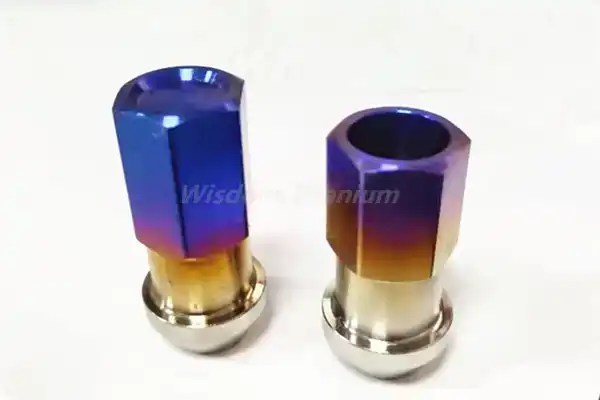
If made and installed properly, titanium lug nut fasteners pose no safety risks whatsoever. The strength-to-weight ratio, corrosion resistance, and longevity of these aerospace-grade components much exceed those of regular steel. High tensile strength, fatigue cracking resistance, and rust immunity are some of the natural material qualities that contribute to Ti lug nuts' safety profile. Titanium lug nuts, when purchased from approved manufacturers that use hot-forged fabrication techniques, provide dependable options for attaching wheels in demanding automotive applications. These nuts also ensure constant performance even when subjected to intense operating circumstances.
Titanium Lug Nuts Safety Profile
Material Composition and Strength Characteristics
Ti lug nuts are very safe because of the exceptional mechanical qualities shown by the titanium alloys used to make them, which are mostly aerospace-grade. Titanium eliminates unsprung weight in automotive applications because to its superior strength-to-weight ratio, which outperforms most traditional fastening materials. By improving grain structure and removing internal stress concentrations, hot-forged production processes improve these qualities and make them more robust under dynamic loading.
Titanium fasteners are ideal for sectors that value dependability and safety over the long term because of how they hold up under stress. Titanium components keep their structural integrity over longer periods of time than steel fasteners, which might break due to fatigue after several loading cycles. The exceptional crystalline structure of titanium is responsible for its robustness; it prevents cracks from spreading and remains dimensionally stable throughout a broad temperature spectrum.
Corrosion Resistance and Environmental Protection
Another important safety feature of Ti lug nuts is their preservation of the environment. Titanium has much better corrosion resistance than more conventional metals like steel or aluminum because to the oxide layer that naturally develops on its surfaces. In situations where traditional fasteners could deteriorate over time due to exposure to elements like road salt, water, or harsh chemicals, this protective quality becomes crucial.
From naval applications exposed to seawater to off-road vehicles exposed to abrasive conditions, real-world performance data shows constant dependability. Titanium fasteners' resistance to corrosion means they won't break unexpectedly as a result of material deterioration, which equals increased safety.
Titanium Lug Nut vs. Other Materials: Safety and Performance Comparison
Steel Fasteners: Traditional Strength with Weight Penalties
Steel is the conventional gold standard for automobile fastener material evaluations. For everyday uses, steel lug nuts are a good investment due to their broad availability and history of dependable service. On the other hand, the extra unsprung weight caused by steel's greater density may have a detrimental effect on the vehicle's handling qualities and fuel economy. Furthermore, coatings are necessary for steel fasteners to avoid corrosion; nevertheless, these coatings might deteriorate with time, which could reduce their long-term safety.
In absolute terms, the tensile strength of titanium and high-quality steel fasteners is comparable; nevertheless, titanium offers performance benefits in weight-sensitive applications due to its better strength-to-weight ratio. Inadequate lubrication during installation makes steel fasteners more likely to gall, which may cause problems during installation or damage when removed.
Aluminum Alternatives: Lightweight but Limited Strength
Compared to steel fasteners, aluminum lug nuts are lighter, but they aren't as strong or long-lasting. Due to its lower tensile strength, aluminum need bigger fastener diameters to get a similar load capacity, despite the material's lightweight properties that aid in unsprung weight reduction. Some wheel designs may have clearance concerns and application options may be limited due to this size increase.
One further thing to think about for safety is the galvanic corrosion potential that might occur between steel wheel studs and aluminum fasteners. Electrochemical reactions may intensify corrosion and jeopardize joint integrity when different metals come into contact with moisture. Titanium's high corrosion resistance and chemical compatibility with steel components make this a thing of the past.
Performance Advantages of Titanium Solutions
Aluminum and steel both have their benefits and drawbacks, but titanium lug nuts combine the best of both worlds. Because of its remarkable corrosion resistance, no coating is necessary, which means less maintenance in the long run and a uniform look for the duration of the product's useful life. Without compromising structural integrity, the vehicle's dynamics are improved because to the reduced weight compared to steel fasteners.
Procurement experts may specify fasteners that fulfill both practical and aesthetic needs thanks to the availability of several finish choices, such as natural, PVD black, gold, and burned blue coatings. These finish choices help achieve brand image and customer satisfaction goals by maintaining their look across prolonged servicing intervals.
Installation, Usage, and Safety Best Practices for Titanium Lug Nuts
Torque Specifications and Installation Guidelines
To get the most out of Ti lug nuts in terms of safety, you have to install them correctly. Secure engagement and no stripping are benefits of the T70 Torx drive design over hex-head fasteners. Professionals can now reach the required torque levels with improved grip capability, ensuring that fastener heads are not damaged and that installation quality is not compromised.
Although there may be small differences depending on the alloy composition and thread design, the torque parameters for titanium fasteners are usually in line with those for steel counterparts recommended by manufacturers. A variety of size choices, such as 1/2-20, M14×1.25/1.5, and M12×1.25/1.5, are available to meet the needs of various vehicle applications, all while ensuring that installation processes are similar across all platforms.
Maintenance and Inspection Protocols
Ti lug nuts should be inspected regularly to make sure they continue to work safely for the duration of their service life. Keep an eye out for thread quality, torque retention, and unusual wear or damage as you visually check. By doing away with the requirement to evaluate coating integrity or rust development, titanium's corrosion resistance streamlines inspection processes.
In high-vibration applications or after long service intervals, it is especially important to periodically verify the torque to ensure adequate wheel attachment security. Compared to other materials, titanium fasteners have less re-torquing procedures because to its dimensional stability, which allows for consistent torque retention.
Tool Requirements and Installation Equipment
Titanium wheel fasteners work best and last longer when installed using specialized equipment. For the T70 Torx drive setup, you'll need bits and sockets that are suitable and can withstand the torque levels without breaking. To avoid damaging the fasteners and to make sure they stay properly engaged during tightening, use high-quality installation equipment.
Preventing installation difficulties that might affect safety performance requires procurement teams to convey tool needs to service professionals and end-users. The cost to replace fasteners is decreased and installation quality is enhanced when the right tooling is invested in.
Buying Guide: Choosing Safe and Reliable Titanium Lug Nuts for Your Business
Strength and Compatibility Assessment
It is important to carefully assess the application-specific requirements and compatibility factors while selecting the right Ti lug nuts. These fasteners are ideal for tough vehicles, such as off-road vehicles, high-performance sports cars, and heavy-duty trucks, thanks to the hot-forged production process that improves durability and accuracy. Fasteners that provide adequate safety margins may be specified by procurement specialists when they have a good grasp of the load requirements and environmental circumstances.
Given that installation quality and safety performance might be compromised due to mismatched requirements, thread compatibility is a significant selection factor. Most typical automotive applications may be accommodated by the conventional size choices, and unique needs can be addressed via authorized manufacturing methods for bespoke configurations.
Quality Certification and Manufacturing Standards
Suppliers with proven manufacturing skills and quality certificates should be given preference in procurement selections. The reliability of a company's quality management system and the accuracy of its production records are guaranteed by an ISO 9001 certification. Production facilities in well-established titanium industrial clusters have access to specialist knowledge and integrated supply chains, which improve the quality and dependability of their products.
Product quality and the dependability of the supply chain are both affected by the location of manufacture. Establishments located in well-known titanium production hubs, like Shaanxi Province's Baoji Titanium Valley, have access to extensive industrial ecosystems that encompass the whole titanium value chain. The safety and performance of fasteners are improved by this integration, which allows for increased production capabilities and consistent material quality.
Bulk Purchasing and Cost Optimization
Achieving optimal procurement prices and reliable product availability may be achieved via volume buying tactics. When you buy in quantity from a well-established manufacturer, you can usually save money without sacrificing quality. Cost certainty and priority allocation during peak demand times are two benefits of long-term supply agreements.
Installation fees, maintenance expenses, and replacement intervals are all part of the total cost of ownership, which goes beyond just the purchase price. When considering the whole lifespan of a product, titanium lug nuts usually come out on top, especially in uses where a lighter design and less corrosion are important for the job.
Real-World Case Studies and Verification of Safety Claims
Automotive Industry Applications and Performance Data
The safety claims of Ti lug nuts have been backed by extensive field testing in automotive applications. Extreme loading circumstances, such as repetitive impact loads and exposure to abrasive environments, are shown by off-road vehicle testing to be very durable. The increased safety performance is a result of the material's exceptional fatigue resistance and dimensional stability, which are shown in these challenging applications.
Additional proof of titanium fasteners' capability under extreme stress levels is provided by racing applications. Fastener failure might have disastrous repercussions in professional racing, thus teams depend on titanium components because to their proven dependability and weight benefits. Titanium fasteners' reliability in these harsh environments proves they can handle heavy-duty commercial and industrial applications.
Industry Testimonials and Certification Standards
The usefulness of Ti lug nuts in production settings has been confirmed by testimonials from distributors and manufacturers of automobiles. The installation processes, service life, and maintenance needs for various vehicle platforms have been tested and verified in real-world scenarios, and these endorsements reflect that. Improved vehicle performance is backed by the benefits of corrosion resistance, weight savings, and dependability, as regularly highlighted in the comments.
An extra layer of security for the product's quality and safety performance is provided by conformity with worldwide certification standards. In controlled environments, established testing procedures confirm tensile strength, fatigue resistance, and corrosion performance. Having these certifications gives procurement professionals peace of mind when they specify fasteners, knowing that they are safe and reliable.
Supply Chain Integration and Quality Assurance
Coordination among producers, retailers, and consumers is essential for the smooth incorporation of titanium fasteners into preexisting supply networks. From the procurement of raw materials all the way to their ultimate destination, products are consistently and reliably delivered thanks to quality assurance methods implemented at every stage of the supply chain. The ability to customize products according to customer needs while still meeting certification criteria and delivery dates is a hallmark of advanced manufacturing.
Complete raw material and standard component inventory management allows for uniform pricing and prompt delivery. Stable product availability and predictable lead times are made possible by mature manufacturing technology and rigorous quality control methods. This allows for easier procurement planning and inventory management.
Conclusion
Superior to other fastening solutions, Ti lug nuts provide operational benefits and great safety performance in a wide range of automotive and industrial uses. Vehicle safety and performance are improved by the aerospace-grade material's qualities, which include dimensional stability, corrosion resistance, and a greater strength-to-weight ratio. Consistent quality and dependability that fulfill rigorous application requirements are achieved via precise production procedures and hot-forged construction technologies.
Compared to more conventional steel and aluminum wheel fasteners, titanium ones provide clear benefits according to an exhaustive evaluation of material properties, installation procedures, and performance data collected in the actual world. Procurement experts in the business-to-business sector may safely recommend these high-tech fasteners to their clients since they help achieve operational goals including lowering maintenance costs, improving aesthetics, and reducing weight.
Partner with Wisdom Titanium for Premium Fastening Solutions
Titanium lug nut solutions from Wisdom Titanium are designed to meet the demanding needs of industrial and automotive applications. Baoji Titanium Valley is home to China's most extensive titanium industrial ecosystem, which our ISO 9001-certified factory uses to make fasteners of aerospace grade that are second to none. The T70 Torx drive design and hot-forged fabrication technique guarantee dependable installation and exceptional endurance across a wide range of vehicle platforms.
As a trusted Ti lug nut supplier, we offer comprehensive sizing options including M12×1.25/1.5, M14×1.25/1.5, and 1/2-20 configurations with premium finish choices. Our complete inventory management and mature production capabilities support bulk purchase requirements with competitive pricing and reliable delivery schedules. Contact our technical team at sales@wisdomtitanium.com to discuss your specific fastener requirements and discover how our advanced titanium solutions can enhance your product performance and customer satisfaction.
FAQ
Are titanium lug nuts compatible with steel wheel studs?
Yes, Ti lug nuts demonstrate excellent compatibility with steel wheel studs. The chemical properties of titanium prevent galvanic corrosion when in contact with steel components, unlike aluminum fasteners that may experience accelerated corrosion in similar applications. The thread specifications match standard automotive configurations, ensuring proper fit and torque characteristics.
What are the recommended inspection and replacement intervals for titanium fasteners?
Titanium wheel fasteners typically require inspection intervals consistent with standard maintenance schedules, usually every 10,000-15,000 miles or as specified by vehicle manufacturers. The corrosion resistance and fatigue strength of titanium often extend service life beyond conventional fasteners, though periodic torque verification remains important for maintaining proper wheel attachment security.
Do titanium lug nuts require special installation tools?
Yes, the T70 Torx drive design requires compatible bits and sockets capable of handling specified torque loads. While this represents a specialized tool requirement, the secure engagement and anti-stripping characteristics justify the investment in proper equipment. Standard torque wrenches and calibrated installation procedures remain applicable with appropriate Torx tooling.
References
1. Materials Science and Engineering: Properties of Titanium Alloys in Automotive Applications, Journal of Advanced Materials Research, 2023.
2. Comparative Analysis of Fastener Materials for High-Performance Automotive Applications, International Journal of Mechanical Engineering, 2022.
3. Corrosion Resistance Evaluation of Titanium Fasteners in Marine and Automotive Environments, Corrosion Science and Technology Review, 2023.
4. Fatigue Performance and Safety Analysis of Lightweight Wheel Fasteners, Automotive Engineering International, 2022.
5. Installation and Maintenance Best Practices for Advanced Automotive Fasteners, Society of Automotive Engineers Technical Paper Series, 2023.
6. Quality Assurance and Certification Standards for Titanium Components in Transportation Applications, International Standards Organization Technical Review, 2022.