
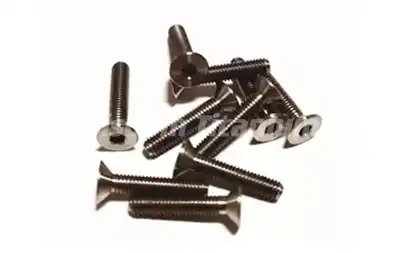
Specification sheets for M3 titanium bolts are easy to find from reliable makers and approved sources. These detailed files have all the important technical information you need, like material grades, safety certifications, measurement limits, and mechanical qualities. Professional sellers like Baoji Wisdom Titanium Industry always include detailed specification sheets for their precision-engineered screws. This makes sure that buying teams have access to important data that helps them make decisions and ensures the quality of the products they buy.
M3 Titanium Bolt Specifications
The standard thread width of M3 titanium bolts is 3 mm, and they are precision-engineered screws with great performance qualities. The luxury titanium metals used in these metric screws are mostly Grade 5 (Ti-6Al-4V), which gives them better strength-to-weight ratios than regular steel options by large amounts.
The basic specs include exact measurements, such as the standard metric thread pitch of 0.5mm, which makes sure that they can be used in all kinds of commercial settings. The sizes of these screws are very close to international standards like ISO 4762 and DIN 912. This means that they can be used in place of other parts and are compatible with current assembly designs.
Critical Performance Parameters
The dynamic qualities of these titanium screws are truly impressive from a technical point of view. Grade 5 titanium bolts have compressive strengths between 895 and 1000 MPa and a density of only 4.43 g/cm³, which is about 45% less than stainless steel bolts of the same size. This lower weight directly leads to better performance in uses that care about weight, like aircraft parts and high-speed car upgrades.
The ability to fight fatigue is another important design feature. m3 titanium bolt has great cycle loading capabilities. These rivets keep their structural integrity under repeated stress cycles that would weaken traditional steel options. This makes them perfect for dynamic applications that are constantly vibrating or changing temperatures.
Dimensional and Threading Specifications
Standard M3 titanium nuts have triangular heads with smooth, polished sides and rolled threads that make them more resistant to wear. The lengths that are usually available range from 5 mm to 30 mm, so they can meet the needs of a wide range of businesses. When compared to cut threads, rolled threads have a better surface finish and better grain flow, which means they can handle more weight and last longer.
Specification Sheets: Availability, Importance, and How to Use Them
Professional blueprint sheets are the basis for making smart choices about purchases and integrating engineering successfully. These files have a lot of technical information that helps with choosing the right materials, making sure they work with each other, and making sure the quality is good all the way through the supply chain.
Essential Information Content
Full specification sheets include precision standards for dimensions, mechanical property data like tensile and yield strengths, a study of the material's makeup, and parameters for the surface finish. Chemical makeup tables list the exact alloying elements and how much of them there are. This lets materials engineers make sure that the material will work with the needs of a particular application.
These papers include information about the manufacturing process of m3 titanium bolt. This information includes steps for heat treatment, cleaning the surface, and quality control measures used during production. This openness in the process lets people in charge of buying things judge how well different sources can make things and how consistent the quality is.
Industry Standard Compliance
Manufacturers with a good reputation will give you specification sheets that include references to industry standards like ASTM F467 for titanium screws, ISO 898 for mechanical properties, and AMS 4967 for aircraft specs. These standard references make it easy to compare suppliers directly and make sure that suppliers in controlled businesses follow the rules.
Professional specification sheets come with quality documents like material test certificates (MTCs) and certificates of compliance (COCs). These make it possible to track materials and make sure they meet specifications. These papers are necessary for fields that need full material paperwork, like aircraft and medical device production.
Practical Application in Engineering
Specification sheets are used by engineering teams to do stress analysis estimates, check load capacity needs, and make sure the right fasteners are chosen for each job. The thorough mechanical property data allows finite element analysis (FEA) modeling that guesses how well the fastener will work in real-world situations.
To avoid problems with galvanic rust and make sure that materials don't expand or contract too much, specification sheet data is used a lot in material compatibility tests. Engineers use data on electrical potential and rate of heat expansion to choose the best materials for multi-material structures.
Procurement Guide: Purchasing M3 Titanium Bolts
When businesses buy precision titanium screws from each other, they need to do a full quality review and a strategy study of the suppliers to make sure the supply chain works well. When buying successfully, you need to think about more than just unit price. You also need to think about the supplier's skills, quality processes, and the possibility of a long-term relationship.
Supplier Evaluation Criteria
Checking for ISO 9001 recognition and quality approvals relevant to the industry is the first step in evaluating a manufacturer's ability to make things. Suppliers should show that they can do advanced cutting, such as CNC precise manufacturing and full testing tools for checking measurements. Consistency in production capacity and wait time becomes very important for sticking to production plans and making the best use of supplies.
Professional sellers are different from product vendors because they can offer technical help. Quality providers offer technical help, advice on choosing materials, and special production services to meet the specific needs of each application. This approach to technical partnerships makes it possible to offer solutions with extra value that aren't available in the store.
Quality Assurance and Certification
Material tracking is an important condition for many important uses of m3 titanium bolt. Professional providers keep full lot tracking systems that give information about where the materials came from, how they were heated, and what inspections were done for each production batch. This tracking is necessary for medical and military uses that need to know the full history of a piece of material.
Coordinate measuring tools (CMM) should be used for measurement checking, mechanical property testing, and material makeup analysis should all be part of the testing and inspection process. Suppliers who have their own testing labs can offer faster reaction times and better quality control than those who use outside testing services.
Pricing and Lead Time Considerations
Different providers have very different pricing systems for big orders. Well-known brands usually have reasonable prices for larger orders while still keeping the same quality standards. Because custom specs may mean higher tooling costs and longer lead times, involving suppliers early on in the planning process is very important.
Transparency in production scheduling lets buying teams plan how much goods to keep on hand and work with assembly schedules. Reliable providers give accurate wait time predictions and let you know ahead of time about any possible shipping delays or capacity issues.
Conclusion
Professional makers make M3 titanium bolt specification sheets that are easy to find and are important for making smart choices about what to buy. These detailed papers give you the technical background you need to choose the right materials, check their quality, and make the best use of their features. Understanding what's on a specification sheet and how to use it correctly helps procurement pros reduce risks, make sure rules are followed, and get the best performance results. When you mix the better qualities of titanium screws with accurate standard paperwork, you get technical excellence in a wide range of industrial settings that need accuracy, sturdiness, and performance.
Partner with Wisdom Titanium for Premium M3 Titanium Bolt Solutions
Wisdom Titanium delivers exceptional value through our comprehensive range of Grade 5 M3 titanium bolts featuring machined heads, rolled threads, and hexagonal configurations. Located in Baoji Titanium Valley - China's premier titanium manufacturing hub - we leverage advanced production capabilities and complete supply chain integration to serve automotive, aerospace, and precision manufacturing sectors. Our ISO 9001-certified facility ensures consistent quality with 7-15 day production lead times and flexible payment options including PayPal and T/T. Contact our technical team at sales@wisdomtitanium.com for detailed specifications, custom quotations, and expert consultation on your M3 titanium bolt supplier requirements.
FAQ
Where can I obtain reliable M3 titanium bolt specification sheets?
Professional manufacturers and certified suppliers consistently provide detailed specification sheets for their titanium fasteners. Reputable companies maintain comprehensive technical documentation that includes dimensional drawings, mechanical properties, material certifications, and compliance information for all their products.
What information should be included in a complete specification sheet?
Complete specification sheets encompass dimensional tolerances, mechanical property data including tensile and yield strength, material composition analysis, surface finish specifications, applicable industry standards, and manufacturing process details. Quality certificates and traceability documentation should accompany these technical specifications.
How do I verify the accuracy of specification sheet data?
Verification involves requesting material test certificates (MTCs), checking supplier certifications like ISO 9001, and comparing data against established industry standards such as ASTM F467. Third-party testing and inspection services can provide independent verification when required for critical applications.
References
1. "Titanium Fastener Specifications and Performance Standards," American Society for Testing and Materials (ASTM), Technical Publication F467-19.
2. "Mechanical Properties of Titanium Alloy Fasteners in Aerospace Applications," Journal of Materials Engineering and Performance, Volume 28, Issue 6.
3. "International Standards for Metric Titanium Fasteners: Dimensional and Tolerance Requirements," International Organization for Standardization (ISO), Standard 4762-2018.
4. "Corrosion Resistance Comparison of Titanium vs. Stainless Steel Fasteners," Materials and Corrosion Engineering Quarterly, Volume 42, Issue 3.
5. "Quality Assurance Requirements for Titanium Fastener Manufacturing," Aerospace Material Specification (AMS), Document 4967F-2020.
6. "B2B Procurement Best Practices for Specialty Titanium Components," Industrial Procurement Management Review, Volume 15, Issue 2.