
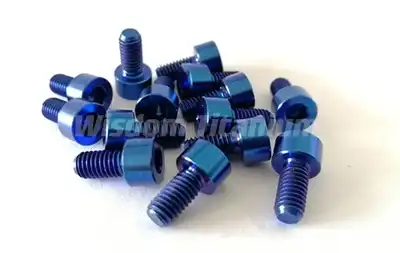
Allen head bolt measurements in millimeters decide how well fasteners fit and work in thousands of industry settings around the world. Knowing important measures like thread diameter, length, head size, and socket depth makes sure that you can work with foreign standards like ISO 4762 and DIN 912. When engineers and procurement managers look for high-performance bolts like the titanium allen head bolt, they need to make sure that the dimensions are correct to avoid problems with assembly. This is especially important in industries like aerospace, marine, and automotive where margins are very important.
Allen Head Bolt Dimensions in mm
Allen head bolts, which are another name for socket head cap screws, are precision-engineered fasteners that must be used in ways that strictly follow measurement standards. Accurate millimeter measurements make global buying easier and make sure that products can be swapped between supply lines.
Core Dimensional Parameters You Must Know
In metric systems, the thread width tells you the bolt shaft's standard size, which is usually between M2 and M36. This number has a direct effect on the load capacity and the compatibility of the matching components. Thread pitch, which is the distance in millimeters between two neighboring threads, changes depending on whether the threads are coarse or small. Engineers choose pitch based on how well the material needs to fight vibrations and how thick it is.
The wrench clearance and aesthetics of exposed parts are affected by the head width and height. The depth of the socket determines how long the contact length is with hex keys, which affects how well power is transferred. On socket cap screws, unlike some other types of fasteners, length measures don't include the head, so procurement teams need to make sure that specs refer to grip length or total length.
International Standards Governing Dimensions
ISO 4762 and DIN 912 set the size limits for metric socket head cap screws, which makes sure that they are the same all over the world. Not only do these standards list stated measurements, but they also list tolerance grades that affect how well things fit. Inch-based equivalents are governed by ANSI B18.3, but metric norms are used for most foreign trade.
Maximum material limits are set by tolerance classes like 6g for external threads. These limits affect how tight the assembly is. Knowing these categories helps buyers set the right gaps to account for temperature expansion, vibration, and corrosion growth over time.
Why Precision Matters in High-Performance Applications
To keep their structural integrity in harsh circumstances, aerospace parts need to be accurate to within microns. Parts of an automobile engine need power values that stay the same, which can only be done with exact thread design. Corrosion can change the size of marine equipment, which makes the original accuracy even more important.
Mismatches in dimensions lead to stress buildup, early tiredness, and catastrophic failure in systems that need to be safe. Specifications that aren't clear can lead to procurement mistakes that stop production lines and cost a lot more than the price of the fasteners themselves.
Titanium Allen Head Bolts — Properties and Specifications
Traditional steel bolts can't handle some situations, but titanium allen head bolt options can. They are made to be very light and have great mechanical qualities. These specialized parts are used in fields where lowering weight and resistance to rust have a direct effect on performance and costs.
Material Composition and Grade Selection
Ti-6Al-4V (Grade 5) is the most common titanium metal for screws. It has 6% aluminum and 4% vanadium in it. There is about 950 MPa of tensile strength in this material, and it also has great wear resistance. The material is 45% lighter than steel nuts of the same size, which makes it essential for optimizing mass in aircraft.
Commercially Pure Titanium (Grade 2) is better at resisting rust than other grades, but it is a little weaker, so it can be used in equipment for chemical processes. Grade 23 (medical-grade Ti-6Al-4V ELI) makes biomedical implants and surgery tools more flexible.
Superior Mechanical and Environmental Properties
Titanium doesn't rust because it has a steady oxide layer that grows back on its own when scratched, unlike steel's protective coats. This quality makes it last longer in saltwater, chemical plants, and high-humidity places where stainless steel normally pits and rusts.
Titanium allen head bolt products have a high strength-to-weight ratio, allowing for weight saves without weakening the joints. This property helps racing cars, drones, and satellite parts because every gram changes how much fuel they use or how much they can carry.
Torque Specifications and Installation Guidelines
Because titanium has a lower modulus of elasticity than steel, torque values need to be changed. Usually, 60–70% of the similar steel fastener standards are needed. Too much torque can cause the thread to break, while too little torque lets it loosen up when the machine shakes. Installation damage can be avoided by using torque wrenches that are properly measured and have the right comparison charts.
Molybdenum disulfide-based anti-seize chemicals lower the risk of galling, which can happen when titanium touches itself or other metals that are not the same. Using the right lubricant makes sure that the locking force stays the same and makes it easier to take apart later.
Verifying Authentic Titanium Fasteners
On markets around the world, fake screws are common. They are made of anodized aluminum or low-grade metal that are sold as titanium. Suppliers with a good reputation give mill certificates that show how the material was made by approved makers. When the stakes are high, spark tests, measuring density, and X-ray fluorescence research are used to make sure that a material is real.
If you look closely, you can tell the difference: real titanium has a unique silver-gray color and feels much lighter than steel. Some Grade 5 fasteners have faint lines that show what kind of metal they are made of, but the lack of marks doesn't always mean the fastener is fake.
Procurement Guide for Titanium Allen Head Bolts
Finding high-quality titanium allen head bolt fasteners means handling complicated source landscapes, making sure certifications are valid, and clearly explaining requirements. Strategic buying cuts down on wait times, guarantees quality, and makes sure that prices are competitive.
Identifying Reputable Suppliers and Manufacturers
Manufacturers that have been around for a while and have aircraft certifications usually have strict quality systems that make sure measurements are correct and materials can be tracked back to their source. Suppliers in specialized industrial areas often have a wider range of products and can help with technical issues. The ISO 9001-certified Baoji Wisdom Titanium Industry and Trading Co., Ltd. was formed in 2016 and is based in Shaanxi Province's Baoji Titanium Valley, which is home to China's biggest titanium industry center. This area has the whole supply chain, from raw titanium sponge to finished parts. This makes prices fair and wait times short.
To figure out what a seller can do, you have to look at their certifications, such as AS9100 for aircraft, ISO 13485 for medical equipment, and NADCAP accreditation for unique processes. Site surveys check the methods for managing inventory, quality control, and the production processes.
Communicating Specifications Accurately
Orders that are clear list the thread size (M6, M8, M10), length, head style (socket cap, button head, flat head), and material grade (Ti-6Al-4V Grade 5) that is being used. Including standard sources (ISO 4762, DIN 912) clears things up. Engineers should make it clear if special coats, custom sizes, or different thread processes are needed.
When buying custom fasteners, technical sketches with GD&T callouts keep things from getting mixed up. Giving sellers tolerance requirements, surface finish specs, and testing methods helps them understand what you expect from them in terms of quality.
Managing Lead Times and Logistics
Standard sizes usually ship between 2 and 4 weeks from when they are in stock, while custom orders take 6 to 10 weeks, based on the number of items and how complicated they are. Planning purchases around project deadlines keeps delays from being too expensive. Combining orders lowers the cost of sending each item and makes managing supplies easier.
There are different ways to ship goods internationally, such as air freight for quick orders and sea freight for big purchases that need to be cheap. Knowing incoterms makes it clear who is responsible for paying for insurance, freight, and clearing customs.
Quality Assurance and Certification Requirements
Material certificates show the past of heat treatment, chemical composition, and mechanical qualities. Reports from third-party testing labs that are recognized by the government show that the standards were met. Dimensional inspection records show that the product meets the limits set in the plan.
Visual inspection, confirming the dimensions of sample parts, and material confirmation through non-destructive testing should all be part of receiving inspection processes. Extra validation should be done for important applications.
Conclusion
Allen head bolt measurements in millimeters are used to choose solid fasteners in all fields around the world. Titanium socket head cap screws have the best corrosion protection and strength-to-weight ratios. Their higher prices are worth it because they last longer and need less upkeep. Engineers and buyers can choose the best screws for tough jobs by knowing about dimensional standards, material qualities, and buying strategies. The right way to install and maintain things will make them work better and last longer in harsh settings like aircraft, marine, chemical, and automotive ones, where failure can have big effects.
Partner with a Trusted Titanium Allen Head Bolt Manufacturer
Wisdom Titanium makes precision titanium allen head bolts that meet ISO 4762 and DIN 912 standards. They work with clients in aerospace, sea, and industry all over the world. Our plant in Baoji Titanium Valley has access to full supply lines that make it possible to track materials and get good deals on large orders. We offer unique sizes, faster production for jobs that need to be done right away, and expert help during the whole process of buying. Talk to our team at sales@wisdomtitanium.com about your specific needs, get detailed quotes, and find out how working with a well-known titanium allen head bolt supplier can make your buying easier while ensuring quality and on-time delivery.
FAQs
What socket size fits standard titanium allen head bolts?
Following ISO 4762 guidelines, socket sizes match thread width. Hex keys that fit M6 bolts are 5 mm, 6 mm, 8 mm, and 10 mm. Hex keys that fit M12 bolts are 10 mm. For most industrial uses, metric hex key sets with sizes ranging from 2mm to 10mm can handle most bolt sizes.
Can titanium allen head bolts replace Grade 8.8 steel directly?
Grade 5 titanium has about the same tensile strength as Grade 8.8 steel (900 to 950 MPa), so it can be used directly in many situations. Engineers need to make sure that lower elastic modulus and different temperature expansion factors don't make joints less stable. By changing the torque specs, you can keep titanium's more flexible threads from being over-tightened.
Why do aerospace applications prefer titanium over stainless steel?
Airplanes use less fuel and can carry more cargo when they are lighter. Every kilogram of weight saved directly translates to lower running costs. Titanium is very resistant to wear, which means it will work reliably under the repeated loading conditions that are common in flight operations. Galvanic corrosion is a problem that aluminum and steel bolts in composite buildings have, but carbon fiber composites don't have that problem.
References
- International Organization for Standardization. (2004). ISO 4762: Hexagon socket head cap screws. Geneva: ISO Standards Catalog.
- Donachie, M. J. (2000). Titanium: A Technical Guide (2nd ed.). Materials Park, OH: ASM International.
- Bickford, J. H. (2008). Introduction to the Design and Behavior of Bolted Joints (4th ed.). Boca Raton, FL: CRC Press.
- Boyer, R., Welsch, G., & Collings, E. W. (1994). Materials Properties Handbook: Titanium Alloys. Materials Park, OH: ASM International.
- Deutsches Institut für Normung. (2003). DIN 912: Hexagon socket head cap screws. Berlin: DIN Standards Committee.
- American Society for Testing and Materials. (2017). ASTM B348: Standard Specification for Titanium and Titanium Alloy Bars and Billets. West Conshohocken, PA: ASTM International.