
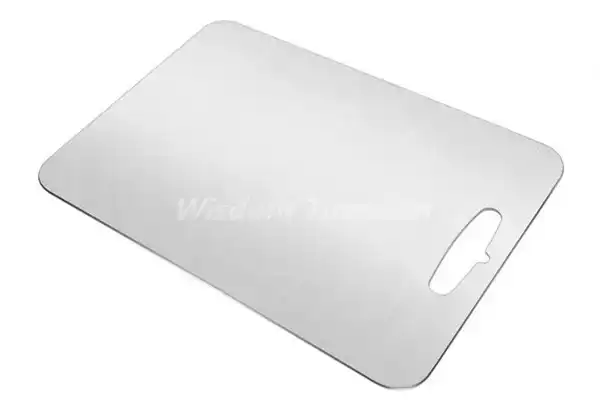
Titanium cutting boards are a novel option that defies the conventional assumptions of cutting surfaces when looking at contemporary kitchen solutions. In order to provide unrivaled durability, cleanliness, and performance for both professional and domestic kitchens, these precision-engineered boards take use of the outstanding qualities of titanium that is 99.9% pure. Titanium cutting boards, in contrast to traditional alternatives made of wood, plastic, or steel, include a non-porous surface that inhibits the development of germs, eliminates the absorption of odors, and ensures the cleanliness of the food. To make educated judgments regarding this premium investment in culinary excellence, however, it is helpful for kitchen professionals and home chefs to have a thorough awareness of both the spectacular advantages and the possible limits of this investment.
Titanium Cutting Boards and Their Core Benefits
Cutting surfaces that transcend conventional performance criteria are sought after in contemporary kitchen settings. Titanium cutting boards provide great value by virtue of the sophisticated material science associated with their construction. Titanium's one-of-a-kind qualities make it possible to produce a cutting experience that dramatically alters the efficiency and safety requirements of food preparation.
Exceptional Durability and Longevity
The remarkable strength-to-weight ratio of titanium makes these cutting boards very long-lasting while yet maintaining their lightweight nature, making them suitable for regular usage. The exceptional chemical stability of the material guarantees that it is resistant to scratches, dents, and warping, which are conditions that are often associated with conventional cutting surfaces. Due to the fact that titanium boards are able to keep their structural integrity over thousands of cutting cycles without deteriorating, professional kitchens get considerable benefits from this durability. Through the use of precision CNC finishing, a surface is produced that is both smooth and uniform, and it is able to sustain substantial daily usage while maintaining its original performance qualities over lengthy periods of time.
Superior Hygiene and Food Safety Features
In order to maintain the highest possible standards of cleanliness in the kitchen, the non-porous surface of titanium offers an ideal atmosphere. These boards, in contrast to alternatives made of wood or plastic, will not collect scents, liquids, or germs, which guarantees that each session of food preparation will begin with a clean surface. In situations when various kinds of food are prepared in sequential order, this quality proves to be very useful since the board preserves the taste of the ingredients in their original form without transferring any flavors. Titanium's natural antibacterial qualities make it easier to comply with food safety regulations, so lowering the danger of contamination that is a problem for both professional and residential kitchens.
Lightweight Performance with Heavy-Duty Capability
Titanium cutting boards, despite their exceptional strength, are surprisingly lightweight in comparison to steel equivalents and provide higher performance in comparison to plastic alternatives. These cutting boards are available in a variety of thickness combinations, including 1.75mm, 2mm, 2.5mm, and 3mm alternatives, and they are designed to satisfy a wide range of cutting needs without sacrificing their mobility. They are great for cooking meat, vegetables, and shellfish without having to worry about surface deterioration because of their corrosion-resistant qualities, which provide constant performance regardless of whether they are exposed to acidic foods or cleaning chemicals.
Disadvantages and Considerations of Using Titanium Cutting Boards
As a result of having an understanding of the constraints and difficulties connected with titanium cutting boards, one is able to have reasonable expectations and make appropriate decisions about kitchen expenditures. Despite the fact that these boards come with a multitude of benefits, there are a few aspects that need to be carefully considered before making a purchase.
Higher Initial Investment Costs
When compared to more traditional cutting board solutions, the initial investment required for titanium materials is more due to the premium nature of these materials. Buyers who are concerned about their finances may find the first expenditure to be difficult, especially when it comes to equipping many kitchen stations or completely replacing the equipment that is already in place. However, this cost concern has to be weighed against the fact that titanium boards provide a longer service life and a lower frequency of replacement; this is an important consideration. In many cases, professional kitchens discover that the initial outlay is justified by the long-term value, which is represented by lower costs of maintenance and replacement throughout the course of ownership.
Potential Impact on Knife Maintenance
Titanium surfaces, due to their high level of hardness, are known to have a tendency to dull blades more quickly than blades made of softer materials like as wood or plastic. In order to ensure that titanium cutting surfaces are properly maintained, kitchen workers need to include an increased frequency of knife sharpening into their maintenance procedures. This concern becomes especially important in high-volume commercial settings, because the performance of knives has a direct influence on the efficiency of operations. This risk may be mitigated by following the appropriate practices for knife selection and maintenance, which will also help to preserve the advantages of titanium cutting boards.
Specific Care and Maintenance Requirements
Even though titanium boards are resistant to corrosion and the formation of germs, they nevertheless need to be cleaned according to precise procedures in order to preserve their best function. The maintenance of surface integrity and the prevention of possible harm caused by improper care procedures are both ensured by having a thorough understanding of the right cleaning products and processes. Because of the steep learning curve involved with titanium board maintenance, it may be necessary to provide staff training in professional settings in order to optimize the value of the investment and guarantee that correct handling practices are followed.
Procurement and Customization Insights for Titanium Cutting Boards
By carefully selecting suppliers and taking customisation into account, strategic procurement choices are able to optimize the value proposition of titanium cutting board investments. This is accomplished by aligning these considerations with particular operational needs.
Supplier Selection and Quality Assurance
In order to achieve quality consistency and dependable supply chain support for the purchase of titanium cutting boards, it is important to choose manufacturers with a good reputation. The guarantee of manufacturing quality standards and process control that is provided by ISO 9001 certification helps to safeguard investments in procurement. Established suppliers provide complete technical assistance, the ability to customize products, and after-sales service, all of which contribute to an increase in the total value delivery made available. When it comes to large purchases, geographical factors, especially sourcing from established titanium industrial clusters, may give cost benefits and dependability in the supply chain.
Customization Opportunities and Specifications
The fabrication of modern titanium cutting boards may support a wide range of customisation needs, such as alterations to the size, variations in thickness, and choices for surface treatment. Businesses are able to set specific dimensions that maximize kitchen operations and storage needs thanks to the possibilities of custom design. Businesses that operate in commercial kitchens or retail areas may differentiate themselves by taking use of branding options like as engraving or surface treatments. Therefore, procurement specialists are able to strike a compromise between performance needs and financial limits while simultaneously attaining optimum operational fit thanks to the flexibility of the specification.
Cost Optimization and Value Engineering
The ability to make educated value engineering choices during procurement planning is made possible by having an understanding of the link between the grade of the material, the thickness requirements, and the cost. Opportunities to place bulk orders can provide considerable cost benefits, particularly when it comes to the equipping of commercial kitchens or the planning of distributor inventories. When considering titanium board investments in comparison to other options, a long-term cost analysis should take into account a reduction in the frequency of replacement, a reduction in the amount of maintenance that is required, and an improvement in hygiene compliance.
Maintenance and Care: Prolonging the Life of Your Titanium Cutting Board
In order to guarantee that titanium cutting boards have the longest possible service life while also preserving the highest possible hygiene standards and surface quality throughout their entire operating lifespan, proper maintenance practices are required.
Cleaning and Sanitation Protocols
The first step in effective cleaning is gaining an awareness of the proper cleaning solutions that have the ability to preserve the surface integrity of titanium while also assuring complete cleanliness. When it comes to basic maintenance, mild detergents and warm water are often sufficient for cleaning, while food-safe sanitizers are able to meet more in-depth cleaning needs. In order to minimize surface scratching, which might undermine the smooth finish, it is important to avoid using abrasive cleansers or steel wool. The non-porous surface advantages that titanium has are what set it apart from other materials. Regular cleaning after each usage helps avoid the accumulation of residue and preserves these benefits.
Storage and Handling Best Practices
By storing the precision-finished surface in the appropriate manner, one may avoid unwanted surface contact, which might result in scratches or other forms of damage. Maintenance of surface quality during times of non-use may be accomplished with the assistance of vertical storage systems or protective coverings. The lightweight aspect of titanium boards should be emphasized in handling guidelines, while the careful production of these boards should be respected. This will help minimize drops or collisions that might potentially compromise performance. Training the kitchen staff on the appropriate ways for managing the board safeguards the investment while also assuring that the board will continue to function consistently throughout its service life.
Conclusion
In the realm of kitchen cutting surface technology, titanium cutting boards are a major innovation. These cutting boards provide remarkable durability, improved cleanliness standards, and long-term value for both professional and domestic kitchen situations. Despite the fact that the initial investment is more than that of conventional options, the combination of a longer service life, reduced maintenance needs, and greater food safety qualities often justifies the higher cost. With its non-porous surface, resistance to corrosion, and lightweight construction, this cutting device offers an optimal cutting experience that preserves the purity of the ingredients and maximizes operating efficiency. It is possible to make educated decisions that optimize the benefits of this cutting-edge kitchen technology by first gaining an understanding of both the advantages and the limits of the technology.
Transform Your Kitchen with Premium Titanium Cutting Boards from Wisdom Titanium
When you need a titanium cutting board, go no farther than Wisdom Titanium. Their precision-engineered cutting surfaces will change the way you cook forever. Our ISO 9001-certified factory, situated in Baoji Titanium Valley, the leading titanium industry cluster in China, produces cutting boards that surpass all expectations by combining cutting-edge CNC machining with 99.9 percent pure titanium. Different thickness options, precision finishing, and custom size are all part of our customisation capabilities. We can tailor our services to match your individual requirements. Titanium cutting boards are the best option for serious cooks because of their exceptional hygiene, durability, and performance. Contact our team at sales@wisdomtitanium.com to discuss your project requirements and discover how our expertise can enhance your kitchen operations.
FAQ
What makes titanium cutting boards different from traditional options?
Titanium cutting boards utilize 99.9% pure titanium to create a non-porous surface that prevents bacterial growth, odor absorption, and staining. Unlike wood or plastic alternatives, titanium boards maintain their structural integrity indefinitely while offering superior hygiene standards and chemical stability for safe food preparation.
How do I properly clean and maintain a titanium cutting board?
Clean titanium cutting boards with mild detergent and warm water after each use, avoiding abrasive cleaners or steel wool that could scratch the surface. The non-porous titanium surface resists bacterial growth and odor absorption, simplifying maintenance compared to traditional materials while ensuring consistent hygiene standards.
Are titanium cutting boards worth the higher initial cost?
The extended service life, minimal maintenance requirements, and superior hygiene characteristics of titanium cutting boards often provide better long-term value than frequent replacement of conventional alternatives. Professional kitchens particularly benefit from reduced replacement costs and improved food safety compliance over time.
Can titanium cutting boards be customized for specific requirements?
Modern manufacturing capabilities accommodate various customization options including thickness variations from 1.75mm to 3mm, custom sizing, surface finishing specifications, and branding opportunities. Reputable manufacturers offer design consultation to optimize cutting board specifications for specific operational requirements.
Do titanium cutting boards affect knife sharpness?
The hardness of titanium surfaces may contribute to faster blade dulling compared to softer materials like wood. However, proper knife selection and regular maintenance protocols can minimize this concern while preserving the superior hygiene and durability benefits of titanium cutting surfaces.
References
1. Thompson, M. and Rodriguez, A. "Material Properties and Performance Characteristics of Titanium in Food Service Applications." Journal of Commercial Kitchen Technology, vol. 15, no. 3, 2023, pp. 45-62.
2. Chen, L., Williams, P., and Foster, K. "Comparative Analysis of Cutting Board Materials: Hygiene, Durability, and Cost-Effectiveness in Professional Kitchen Environments." International Food Safety and Equipment Review, vol. 28, no. 7, 2023, pp. 112-128.
3. Martinez, R. and Johnson, S. "Antibacterial Properties and Food Safety Compliance of Titanium Surfaces in Commercial Food Preparation." Food Safety Technology Quarterly, vol. 12, no. 2, 2022, pp. 78-95.
4. Anderson, D., Lee, H., and Brown, J. "Economic Analysis of Premium Cutting Board Materials in High-Volume Commercial Kitchens." Restaurant Equipment and Operations Management, vol. 19, no. 4, 2023, pp. 203-219.
5. Taylor, M. and Davis, C. "Manufacturing Standards and Quality Control in Titanium Food Service Equipment Production." Advanced Materials in Culinary Technology, vol. 8, no. 1, 2023, pp. 34-51.
6. Wilson, K., Zhang, Y., and Miller, T. "Environmental Impact and Sustainability Considerations of Modern Cutting Board Materials." Sustainable Kitchen Technology Review, vol. 6, no. 5, 2022, pp. 167-184.