
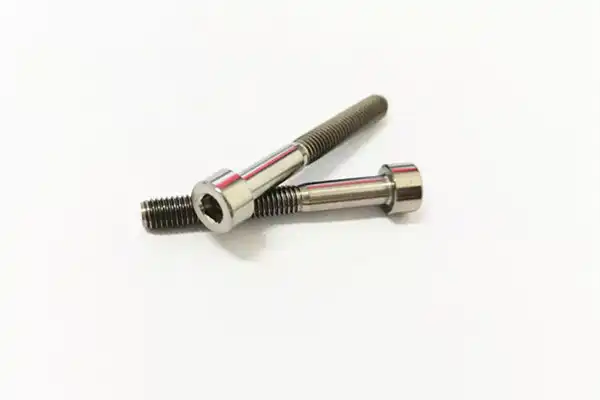
TiN bolts from DIN 912 are the best for important engineering jobs because they don't rust and are strong for how light they are. Special bolts like these are much better than regular steel fasteners in harsh environments. They are used in cars, boats, airplanes, and medicine. Let's talk about why DIN 912 titanium bolts are cool and how they improve engineering.
Material Advantages and Performance Characteristics of DIN 912 Titanium Bolts
To be strong, bendy, and not easily worn down, Grade 5 (Ti-6Al-4V) titanium alloys are the best. This is what has been used to make DIN 912 titanium bolts up to now. That's what you get when you mix pure titanium with vanadium, aluminum, and aluminum. In terms of mechanics, this makes a big difference.
Nickel-based alloys work better for DIN 912 bolts than stainless steel because they
- stretching makes it 45% stronger
- This is 66% less dense
- More long-lasting, especially in places where corrosion is a problem because of normal wear and tear
- Solid and resistant to cracks
Ti-bolts can keep their shape for a much longer time after being loaded and unloaded many times because of this. One good thing about having a longer fatigue life is that it helps when there are moving stresses like vibration, temperature change, and so on.
Tin doesn't need any extra coverings because it already has a layer of oxide on it that keeps it from rusting. In other words, DIN 912 titanium bolts can stay strong for a long time even after being exposed to saltwater, strong chemicals, and other things that weaken metal.
Performance Comparison of DIN 912 Titanium Bolts and High-Strength Steel Bolts
Steel bolts have been used for a long time in many places in engineering. But DIN 912 titanium bolts hold weight much better, especially in light designs. Check out how titanium bolts compare to strong steel bolts:
DIN 912 bolts are made of grade 5 titanium, which can't be broken apart without 895–1000 MPa of force. It's about the same as many types of high-strength steel. Titanium, on the other hand, is strong but not heavy like steel.
Yield Strength: Titanium bolts usually have the same yield strength as steel bolts of the same size, which is 825 to 869 MPa. In other words, they can hold more weight before they break.
How strong is it when it's tired? It's between 35 and 40 percent for most steels, but it's only about 50 percent for titanium. When the load changes, this means the life will last a lot longer.
Ti-bolts don't lose their strength as quickly as steel bolts do in places where corrosion is common. Even after being in dirty chemicals and salt water for a long time, they can still hold their load.
This is the reason why smaller DIN 912 titanium bolts can hold as much weight or even more than bigger steel bolts. This can make it much easier to lose weight in space, cars, and other places.
Engineering Applications of DIN 912 Titanium Bolts
Since DIN 912 titanium bolts are strong, light, and rustproof, engineers can use them for tough jobs.
Engine mounts and landing gear assemblies use Ti-6Al-4V bolts. Strength for weight lets you save weight without sacrificing safety or performance.
Titanium's corrosion resistance helps medical tools. It can be used to make surgical and internal instruments. They are for long-lasting bone and tooth implants.
Aluminium bolts improve airflow in Formula 1 and other fast cars. Engine parts, brake calipers, and body panels.
Bolts are great for marine tech if not salty. Submersible sensors, boat propellers, and offshore structures use them because steel fasteners break.
Hot parts of chemical plants and refineries touch metal-degrading chemicals. They use DIN 912 steel bolts.
Solar and wind turbines use titanium fasteners more. They can withstand rough conditions because they are strong and low-maintenance.
DIN 912 titanium bolt-matching steel fasteners are rare. In rough conditions, they make things lighter and stronger, making them ideal for engineering.
Because they are strong, light, and don't rust, DIN 912 titanium bolts can be used for many things by engineers. These high-tech fasteners are used instead of metal bolts in medical devices, aerospace, auto racing, and marine engineering.
Find out about the smart features of DIN 912 titanium bolts to make engineering projects more effective, long-lasting, and effective. Smarts Titanium CNC fasteners and parts are very good. They are used in many places. Our R&D team has worked with ISO 9001 before and can give you ideas.
Locate DIN 912 titanium bolts that can help your next job. Get a free quote and talk about your needs right now. If you email sales@wisdomtitanium.com, we'll help you figure out how to use titanium in your engineering work.
FAQs
Q1: Do DIN 912 titanium bolts cost more than steel bolts?
It costs more and takes more work to make iron bolts than steel bolts. They work better, last longer, and break lighter, so the extra money is well spent.
DIN 912 titanium bolts won't rust when used with other metals.
No matter how little it rusts, Ti-8 shouldn't be kept near other metals. Ti bolts can be used with stainless steel, aluminum, and most engineering materials. In places where there is rust, carbon steel shouldn't be used.
What sizes do DIN 912 titanium bolts come in?
There are 6–250 mm long DIN 912 titanium bolts with M1.6–M24 threads for the most part. It is possible to engineer most things to be any size or shape.
How is titanium bolt torque different from steel bolt torque?
For bolts of the same size, most of them preload with less torque. Tin doesn't bend as much as steel does. To take care of titanium fasteners, follow the torque rules on the package.
Do I need to learn how to put on or take off a DIN 912 titanium bolt?
When installing titanium bolts, don't overtorque them or use the wrong grease. Not being mean anymore. Taking off the titanium bolt shouldn't hurt the head. Fewer brass bolts are made than steel ones. To add or remove something, you need the right tools and know-how.
References
- Lutjering, G., & Williams, J. C. (2007). Titanium. Springer Science & Business Media.
- Boyer, R., Welsch, G., & Collings, E. W. (1994). Materials properties handbook: titanium alloys. ASM international.
- Peters, M., Kumpfert, J., Ward, C. H., & Leyens, C. (2003). Titanium alloys for aerospace applications. Advanced engineering materials, 5(6), 419-427.
- Rack, H. J., & Qazi, J. I. (2006). Titanium alloys for biomedical applications. Materials Science and Engineering: C, 26(8), 1269-1277.
- Donachie, M. J. (2000). Titanium: a technical guide. ASM international.




