
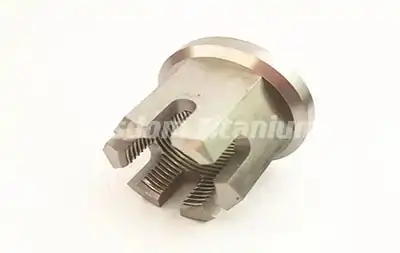
It is the purpose of a titanium castle nut to provide a high-performance fixing solution that is both very strong and very light. It is intended to work in critical situations where other fasteners fail. These nuts are made from aerospace-grade materials like Titanium Grade 5. They have castellated holes that can hold cotter pins or safety wire, which keeps them from coming loose when there is a lot of vibration, high-speed spinning, or changes in temperature. They solve the problem of fastener failure in racing cars, tuning projects, and high-performance vehicles caused by rotating mass and corrosive environments. They do this by lowering the weight of an assembly by about 45% compared to steel while still having better tensile strength and fatigue resistance.
Titanium Castle Nut vs Other Materials: Making the Right Choice
The choice of material has a direct effect on the total cost of ownership, dependability, and performance. Procurement professionals can make choices based on facts that are in line with operational needs and budget limits when they know the advantages of titanium castle nuts compared to other materials.
Steel Castle Nuts: Traditional Strength with Weight Penalties
Because it is cheap and easy to find, high-strength steel is still the most popular material used for car fasteners. Grade 8 steel bolts have tensile strengths about the same as Grade 5 titanium, and steel castle nuts work well in most vehicle situations. The price of the material is much lower than titanium—usually 70–80% less per unit.
Another problem is that corrosion can happen. Even with protective coats like zinc plating or cadmium finish, oxidation will finally break down steel screws in harsh settings. Inspections and replacements must be planned into maintenance plans on a regular basis. This adds to the lifetime costs that often go over the original price savings.
Aluminum Castle Nuts: Lightweight but Mechanically Compromised
Aluminum alloys save a lot of weight—in some cases they're even lighter than titanium—which makes them a good choice for non-critical uses. Aerospace-grade aluminum alloys, such as 7075-T6, are pretty strong for how light they are, and they don't cost too much to make.
Another worry is how long the thread will last. Because aluminum is a softer material, threads can gall and strip during installation, especially when they are torqued to the levels needed for safety-critical connections. Assembling and disassembling many times, which is normal during race season maintenance, speeds up thread wear, so they need to be replaced more often than titanium options.
Stainless Steel: Corrosion Resistance with Performance Trade-offs
Austenitic stainless steel types 304 and 316 are great at resisting corrosion, which makes them good for use in sea and coastal settings. The material doesn't rust and doesn't need any extra surface treatments. This makes managing goods easier and cuts down on coating-related fails.
The weight stays about the same as carbon steel, so the performance benefits that are important for racing uses are lost. Stainless steel also has a lower tensile strength than Grade 5 titanium, usually between 515 and 620 MPa based on the alloy. This means that thicker parts are needed to carry the same amount of weight. Galling tendency is another problem that needs to be solved because steel screws can cold weld during installation if they are not properly lubricated with anti-seize products.
Available Specifications and Surface Treatments
Wisdom Titanium makes titanium castle nuts with thread sizes M22 and M24, which cover the most popular uses in high-performance cars. These measurements are the same as those used by tuning cars and racing cars for wheel studs, suspension links, and engine parts.
Surface Finishing Options for Enhanced Performance
Surface treatments aren't just for looks; they also have practical benefits like making things less likely to rust, reducing friction, and making it easier to see what's inside complicated systems. We have three main choices for finishing:
- Polished finish gives the surface a smooth, mirror-like look that reduces stress spots and makes it easier to see if there are any cracks or damage on the surface. The finishing process gets rid of small machining lines and makes the look regular, making it good for show cars and high-end builds where the way the parts look is important. Although polished titanium naturally keeps its look without any extra protective coats, fingerprints can still be left on the bare metal finish when it is handled.
- Anodizing makes a controlled oxide layer that makes the surface much harder and more resistant to wear through electrochemical processing. Type II anodizing makes a thin, long-lasting coating that comes in different colors. Blue, gold, purple, and red are still commonly used in racing to visually show torque specs or identify parts. The process raises the surface hardness to about 70 HRC while adding less than 0.001 inches to the size requirements. This means it can be used in applications that need precise measurements.
- PVD coating (Physical Vapor Deposition) bonds very hard ceramic layers like titanium nitride to the base material as the best way to treat the surface. This layer is very resistant to wear and lowers friction coefficients, which makes threads last longer when they are put together over and over again. PVD-coated castle nuts have a unique gold or bronze color and stay lubricated so they don't gall up when installing with a lot of force. The layer stays very thin—usually between 2 and 5 microns—so the dimensions stay accurate while it provides strong surface protection.
How to Install and Maintain Titanium Castle Nuts?
The right way to place these precision screws will make sure they work as well as they can and prevent damage that could weaken the structure. Because titanium castle nuts are a unique material, they need to be handled in a way that is different from how steel screws are usually handled.
Installation Best Practices and Torque Specifications
Before thread preparation can begin, both the male and female threads must be cleaned thoroughly to get rid of dirt, old anti-seize substance, and other waste. Titanium threads should not be oiled with copper-based anti-seize products like steel threads should be. This is because different metals can cause galvanic breakdown in some situations. Molybdenum disulfide-based lubricants or special titanium assembly compounds offer the right level of security without any worries about chemical compatibility.
Due to the material's different friction properties and elastic modulus, titanium castle nut torque specs are usually 10-15% lower than steel versions. For exact numbers, check the manufacturer's instructions, since over-torquing can break threads or cause stress clusters that shorten the fatigue life. Instead of impact tools, use calibrated torque wrenches. Titanium reacts better to slow, steady loading than to rapid shocks.
Once the torque level is right, line up the castellations with the hole that was drilled in the bolt or stud shaft. If it's needed to get the alignment right, a little extra rotation is still fine—most car uses allow up to 30 degrees of extra rotation beyond the initial torque. Put the cotter pin all the way through holes that are lined up, and bend the legs in different directions to keep the pin from backing out. If you need to, cut off the extra length, leaving about 5 mm of bent material for safe holding.
Routine Maintenance and Inspection Protocols
Visual inspection during regular maintenance checks can find problems before they get so bad that they break. Check castle nuts for cracks that come out of the castellations or thread contact areas. These cracks can mean that the nuts are worn out or that they weren't installed correctly. Surface changes that aren't part of the usual titanium coating could mean that the metal is too hot or there is chemical contamination that needs to be looked into.
To check the thread state, the castle nut has to be taken off every so often so that the internal threads can be inspected for galling, dirt buildup, or damage. Light surface writing is normal and fine, but deep scoring or material transfer is a sign of fitting problems that need to be fixed. Clean the threads with a fluid and a brass brush. Do not use steel wire brushes, as they can attach particles and speed up the wear process.
Verification of torque makes sure that the binding force stays in place. Stress relaxation is slower in titanium screws than in steel ones, but temperature cycling and vibration can change the joint preload. Paint lines or witness marks can be used to mark the initial installation places. This makes it easy to check that nuts haven't turned between inspections.
Conclusion
When used in high-performance car settings where regular fasteners make unacceptable sacrifices, titanium castle nuts offer an appealing value argument. The fact that it is 45% lighter than steel, more resistant to corrosion, and stronger over time solves some of the biggest problems that race teams, auto repair shops, and companies that make high-performance cars face. The qualities of Grade 5 titanium make it safe to use in harsh environments and temperatures, and the castellated locking mechanisms make sure that the fasteners stay in place and don't fail in catastrophic ways.
Material selection research shows that titanium is the best choice because it is in a performance space between inexpensive steel and light aluminum. It has the best mix of strength, longevity, and weight savings. Surface solutions that are available improve usefulness by making things last longer, reducing friction, and making them easier to see. Following the right installation steps and regular repair schedules will extend the life of components and keep safety-critical connections intact under tough working conditions.
Partner with Wisdom Titanium for Superior Fastening Solutions
Wisdom Titanium is an expert at making titanium castle nuts that are precisely designed to meet the high standards of race teams, auto tuners, and companies that make performance vehicles all over the world. We have access to integrated supply lines for titanium sponge, ingots, bars, and high-performance alloys because we are based in Baoji Titanium Valley in Shaanxi Province, which is China's biggest and most complete titanium industry area. This strategic positioning lets prices be affordable without lowering the quality control and authenticity of the materials that are needed for safety-critical uses.
Our ISO 9001-certified manufacturing methods make sure that the quality of the surface finish, tracking of materials, and accuracy of measurements are the same from one production run to the next. Our engineering team is here to help you every step of the way, whether you need standard M22 or M24 castle nuts with polished, anodized, or PVD-coated finishes, or you need special specs for your own uses. We can meet the needs of both small specialty shops and big OEMs because our minimum order quantities start at 100 pieces and our bulk buying options are flexible.
To talk about your unique titanium castle nut needs, please email our technical sales team at sales@wisdomtitanium.com. We have been a trusted provider of the product to the aerospace, racing, and automotive industries since 2016. We have the knowledge, production skills, and quality control that high-performance uses need. You can look through our full selection of titanium fasteners and custom CNC parts made for harsh settings where failure is not an option at wisdomtitanium.com.
FAQ
How does titanium prevent corrosion compared to bolts made of stainless steel?
Titanium quickly forms a solid, self-healing oxide layer when it comes into contact with oxygen. This layer acts as a shield that stops further oxidation, even in saltwater. This passive film works well in pH ranges from 2 to 12, blocking acids, alkalis, and salt solutions that are known to damage stainless steel. Even though 316 stainless steel is pretty resistant to corrosion, it can still be damaged by pitting and crevice rust in marine settings, where titanium does better.
What temperature ranges can Grade 5 titanium castle nuts withstand?
The structure of Grade 5 titanium castle nuts (Ti-6Al-4V) stays the same from very cold temperatures (-240°C) to high temperatures (427°C). Short-term exposure to 540°C doesn't change the properties much. Because they are stable at high and low temperatures, titanium castle nuts can be used in brake systems that go through extreme heat cycles and in cold races, where steel fasteners become brittle.
Can titanium castle nuts be reused after removal?
Titanium screws can usually be used more than once without breaking because the material doesn't change shape much and doesn't gall when fitted correctly and with the right lubricants. Carefully check the threads for damage, cutting, or dirt buildup after they have been taken off. If you don't want to risk structural failure in safety-critical situations, replace castle nuts that have obvious thread damage, cracks, or too much wear.
References
1. Boyer, R., Welsch, G., & Collings, E.W. (1994). Materials Properties Handbook: Titanium Alloys. ASM International, Materials Park, Ohio.
2. Donachie, M.J. (2000). Titanium: A Technical Guide (2nd Edition). ASM International, Materials Park, Ohio.
3. SAE International. (2018). Aerospace Standard AS7245: Nuts, Self-Locking, Hexagon and Castle, Titanium Alloy. Society of Automotive Engineers.
4. Schutz, R.W. & Thomas, D.E. (1987). "Corrosion of Titanium and Titanium Alloys," Metals Handbook (9th Edition), Volume 13: Corrosion, ASM International.
5. Lutjering, G. & Williams, J.C. (2007). Titanium (2nd Edition). Springer-Verlag, Berlin Heidelberg.
6. ASTM International. (2021). ASTM B348: Standard Specification for Titanium and Titanium Alloy Bars and Billets. ASTM Volume 02.04: Nonferrous Metals.